Ray Brown's walking-line formula · For upright jazz bass players
Walk lines that swing like Ray Brown's, from a two-line formula you can write on the back of a set list.
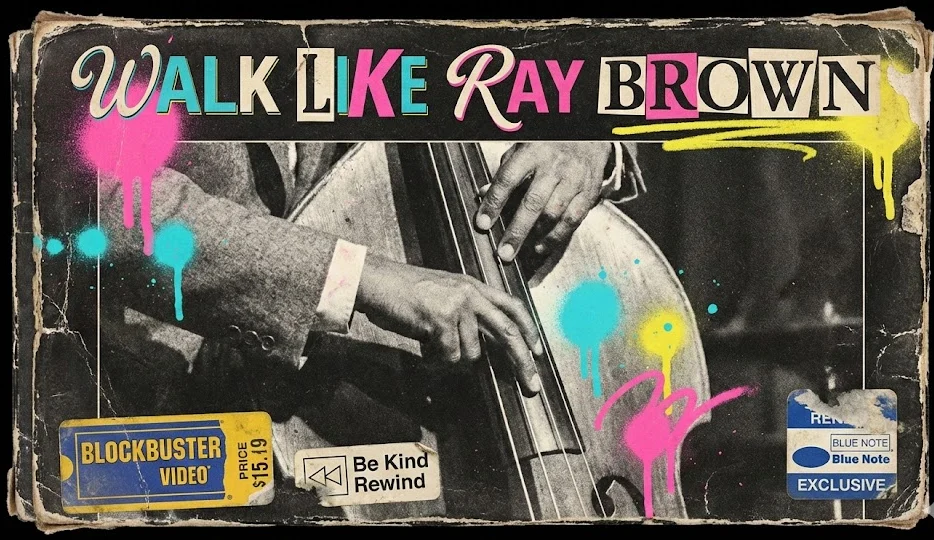
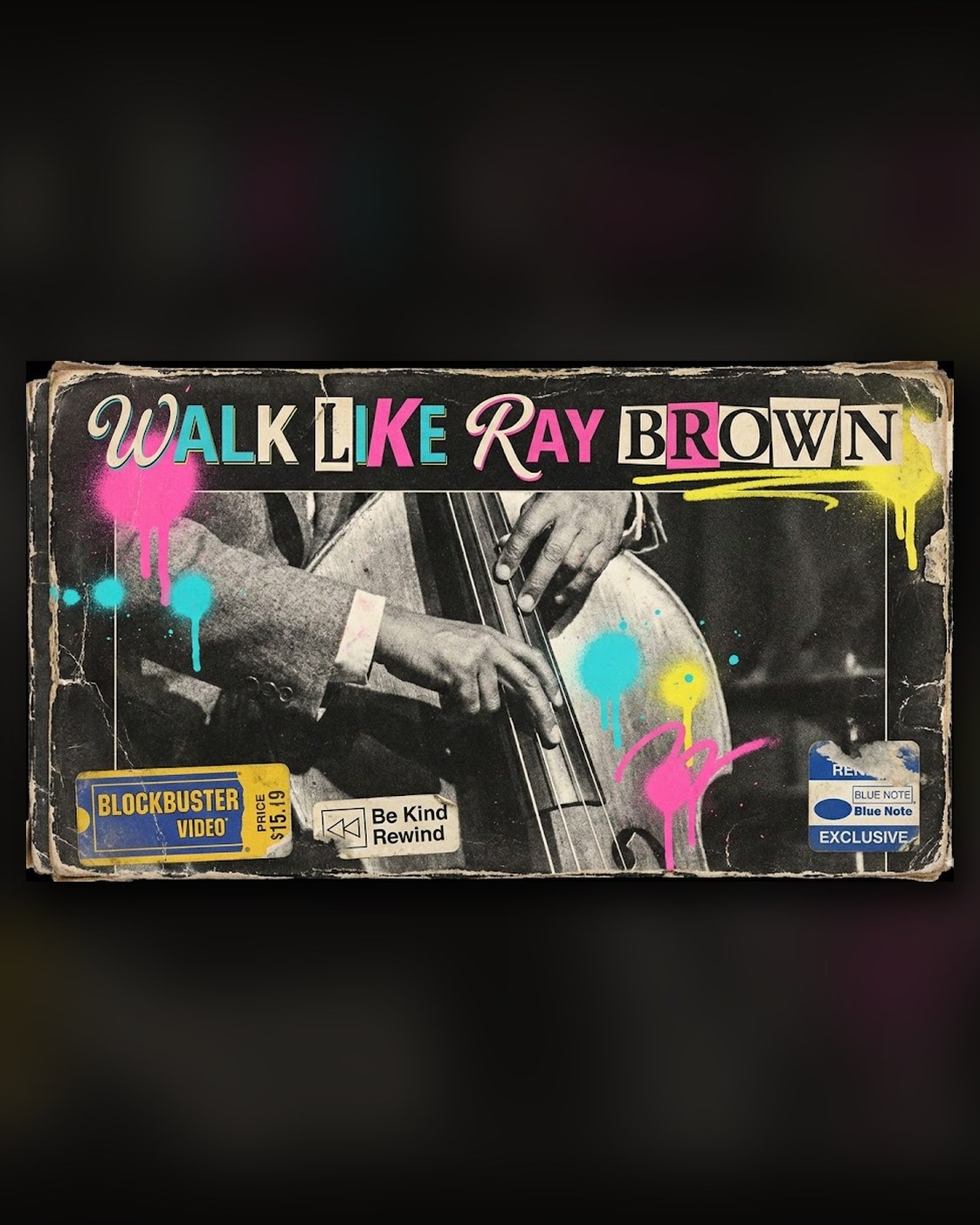
Walk Like Ray Brown · Video + book · By Cole Davis
One payment · Lifetime access
Get Walk Like Ray Brown31-minute video walkthrough · 37-page book · 14-day money-back guarantee
Two of my teachers studied under Ray Brown. They told me nobody has his time, but you can get close by imitating his lines. I didn't believe it until an 11-year-old cellist in a Harlem after-school band sight-read one of those lines, and it swung. The order of his notes was doing the work. This course gives you that order.
An 11-year-old cellist sight-read one of his lines in Harlem, and it swung.
Here's what my teachers told me. Two of them studied under Ray Brown, and they both said some version of the same thing: nobody has his command of the time, but you can get close enough by imitating his bass lines.
I filed that under things teachers say. You can imitate anybody's lines and get a little better. Of course Ray Brown's lines swing. He's the one playing them.
Then I was teaching an after-school band at a public school in Harlem. Bass, drums, keyboards, more drums, guitar, saxophone and a cello. I printed out one Ray Brown line, the opening of “Long Ago and Far Away” with the Oscar Peterson Trio, and asked the cellist to sight-read it. She was 11.
It swung.
“It's not his time, I thought. It's the organization of his lines.”
That's the part you can learn. Nobody gets Ray Brown's time. I don't have it either. But the way he organized a line can be written down, and on page 24 of the book it fits in two lines:
- 1A cadence every two bars, from beat four into beat one, by half step, whole step or 5-1.
- 2One change in every two-bar phrase: chromatic to intervallic, or below the open G to above it.
“That's it!” is how the page ends.
Knowing the formula and hearing it are two different things, so the video comes first. I play a C blues with the formula switched off and then switched on, and you hear the difference bar by bar. At one point a line comes out that I didn't plan. “I didn't even mean to play that,” I say on camera. “I was just following the formula.”
I used to practice six hours a day. The reason was simple: I didn't actually know what I was doing, so I had to practice a lot to come up with these answers. Now I have them, and this course is me handing them to you.
One thing it won't do is teach you time. Page 1 of the book says so. A PDF about Ray Brown's walking lines is the wrong place for time exercises, so there aren't any. This is about which note goes where, and the book's promise is a line organized so well it's “impossible not to swing.” That's what I heard from a cello in Harlem.
Two real pages from the book. Judge the markup before you buy.
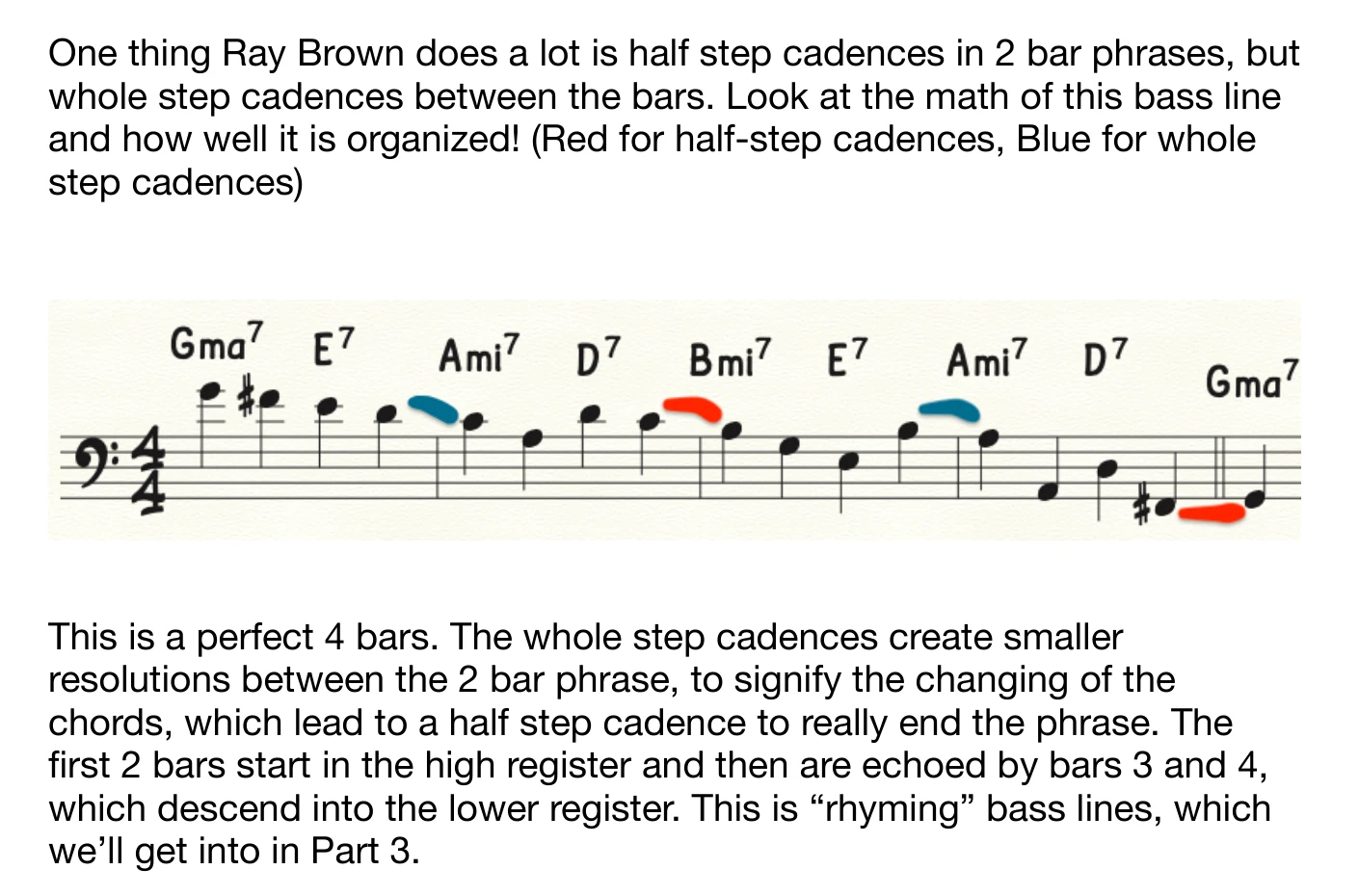
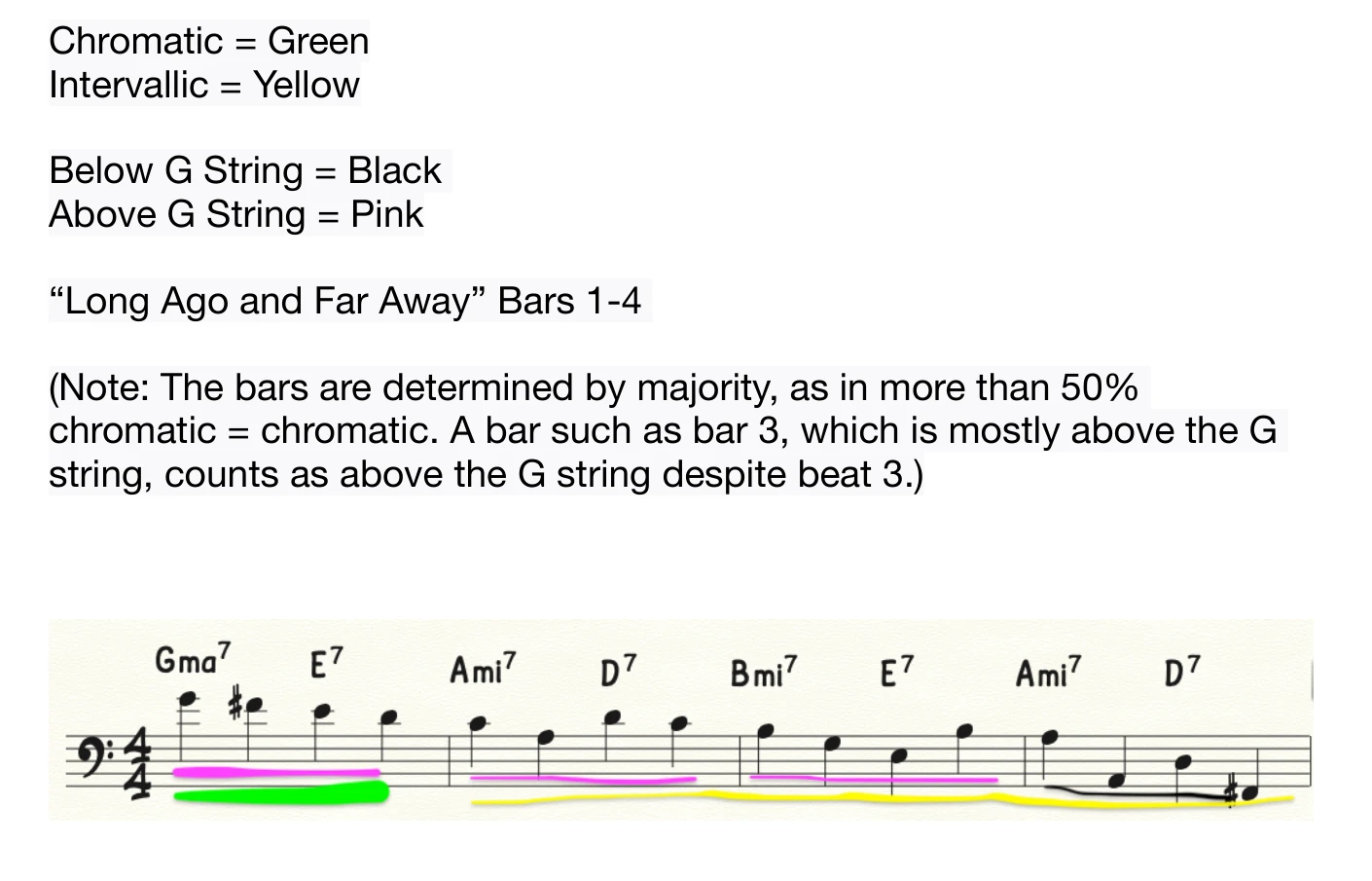
Every rule in the book is shown on an actual Ray Brown line, with the bars numbered, so you can find what I'm talking about and play it.
A video walkthrough, a 37-page book, and five of his lines written out.
Watch the video first. It's where I play the formula on a blues. The book is where it gets specific.
- Every bar you walk is either chromatic or intervallic. Know which one you just played and you know what the next bar needs.
- The open G string, not thumb position, is the line that splits your register in half.
- An F blues played entirely below the G string sounds fine until chorus five. I explain what goes wrong with the way a person talks, then fix it.
- Four types of line (chromatic or intervallic, below or above the G) and the rule for mixing them that I forced myself to follow on gigs.
- Watch a C blues get better while I name each choice out loud. “I wasn't even thinking about the notes I was playing.”
- Israel Crosby played mostly intervallic. Paul Chambers played mostly chromatic. Hear how each one works.
- A cadence is beat four of the second bar into beat one of the third. Here are the three ways to make one.
- A cadence doesn't have to land on the root. On the same C blues I resolve to the 3rd, then to the 5th, and both still work.
- The singers loved Ray Brown, “so much so that Ella Fitzgerald married him,” and I show you what I think did it: two-bar phrases a singer or horn player can lean on.
- The three ways to get from beat four to beat one: half step, 5-1 and whole step. The whole list is on page 3.
- Which cadence to use in the same key, and which one to save for a modulation. (Page 5.)
- Page 6: he plays a root on beat one bar after bar, then holds one back so the 5-1 that follows hits harder. I'm convinced he set that up the whole time.
- A cadence with no root in it anywhere: the 3rd of the C7, the 7th of the F7, then a half step into the 3rd of the B♭ma7. “No roots to be found!” (Page 7.)
- The note on page 7 that may have been a mistake, and how he turned it into a bigger 5-1.
- The 1-7-5-1 lick I call a Ray Brown signature, on page 8. It works over nearly everything.
- How he made lines interesting with only the Right Notes (1, 3, 5, 7, 2, 6 and sometimes 4), when Paul Chambers and Ron Carter reach for dissonance. (Page 9.)
- Even his 8th-note and triplet fills follow the cadence rules. (Pages 12 and 13.)
- “Those 2 bars right there are my whole career.” The Jimmy Blanton entrance on Duke Ellington's “Jack the Bear,” and the drop on beat two it gave Ray Brown. (Pages 14 to 16.)
- The four keys he leaned on for that drop, and the open-string reason three of them work. I admit on page 16 that I can't explain the fourth.
- Page 17, the “Imaginary 5”: there's no D7 on the chart, and he plays one anyway to set up the Gmi7 in bar 5.
- Spacing works like the floor in basketball. A line has to breathe to move. (Page 19.)
- Four bars of “Long Ago and Far Away” marked in four colors at once, so you can see the variety. (Page 21.)
- A perfectly even ratio of chromatic and intervallic sounds worse, and page 21 says so bluntly.
- The two-bars-low, two-bars-high exercise, and the reason you practice it but never play like that on a gig. (Pages 20 and 23.)
- “Moten Swing,” bars 1 to 8: the start that “sounds like an engine getting started.” (Page 23.)
- The formula itself, two lines long. (Page 24.)
- 6ths always work. Page 25 says what they do for a line: they express the chord, and they create melody.
- “Exactly Like You,” bars 1 to 4: a whole phrase below the G string that still has variety. (Page 25.)
- The bar I admit would take me a minute to get in tune. He improvised it. (Page 26.)
- Notes rhyme when they're a 5th, a unison or an octave apart, at the ends of phrases. (Page 28.)
- Israel Crosby on “Cheek to Cheek,” around 2:43, and the reason I call him the godfather of rhyming bass lines.
- The more common way to rhyme: end a two-bar phrase in the opposite direction from the last one. (Page 29.)
- Paul Chambers doesn't rhyme his lines, and that's great too. Useful if you've been trying to sound like him and Ray Brown at the same time.
- Ray Brown with Oscar Peterson does the opposite of Paul Chambers with Red Garland, right down to how loud he sits on the record. (Page 30.)
- The Pat Metheny line on page 27 about four-year degrees, and the one thing you can't get a degree in.
- “Long Ago and Far Away,” Oscar Peterson, Jerome Kern Songbook. The line the cellist sight-read.
- “Have You Met Miss Jones,” Oscar Peterson, We Get Requests. At 81 beats per minute, about 40 with the click on 2 and 4, so there's nowhere to hide.
- “Moten Swing,” Oscar Peterson Trio with Sonny Stitt.
- “Exactly Like You,” Ray Brown Trio with Gene Harris.
- “A Fine Romance,” Oscar Peterson Trio, two excerpts.
They're written out rather than described for one reason: you can put the record on and play them.
Two lines of formula. Five of his lines to prove it.
Built for the bassist who can walk a chorus and wants it organized.
- You play upright, and you can already walk a chorus of a blues in time
- Your lines are correct, but chorus five sounds like chorus one
- You stay in half position most of the night
- You've been told to imitate Ray Brown and want to know what, exactly, to imitate
- You want a rule you can use on the gig tonight
- Anyone looking for time exercises. There aren't any, on purpose.
- Anyone who can't yet get through a blues form in time. Start with the course below.
- Anyone who wants backing tracks and a practice schedule. It's a video and a book.
- Electric players who want fingerings handed to them. The rules carry over. The fingerings are upright.
New to walking?
Start with Walking Basslines on Upright Bass: From the Beginning. Get comfortable walking a form first. This course will be here when you want your lines to sound like his.
One payment. $97. Yours for life.
Walk Like Ray Brown is $97, one time. You get the video walkthrough, the 37-page book and the five lines written out. It opens in your Better Bass Lessons member area the minute you check out, and it stays there.
I found these answers practicing six hours a day. You get them in one video and one book.
Ray Brown would have turned 100 on October 13. Through that day, code RAY20 takes 20% off at checkout.
One payment · Lifetime access · 14-day money-back guarantee
I'm Cole Davis.
I studied with Ron Carter, and I earned my Artist Diploma at Juilliard. Two of my teachers there had studied under Ray Brown.
During a Groovekeeper Society masterclass, Russell Hall said this about me: “Cole's never been to Jamaica, but he can swing, because he understands how to make something beautiful.”
I don't have Ray Brown's natural time. Nobody does. Understanding how his lines are organized gets you close enough, or as the classical people say, “good enough for jazz.” That's what this course is for.
Questions before you buy.
Two lines of formula.
Five of his lines.
A video walkthrough, a 37-page book, and five Ray Brown lines written out so you can play them with the records.
$97 one time
Video + 37-page book · Lifetime access
P.S. Here's a test you can run tonight. Write out one chorus of an F blues. Put a cadence at the end of every two bars, beat four into beat one, by half step, whole step or 5-1. Make one change inside every two-bar phrase. That's the formula from page 24. If your chorus beats the one you played last week, the rest of the book shows the same rules at work in five of Ray Brown's own lines, bar by bar.
Walk Like Ray Brown Video Course
$47.00
Quantity