For upright players who freeze in the flat keys
Play every single change on Rhythm Changes, in all 12 keys, instead of the “bass-friendly” version we all fall back on
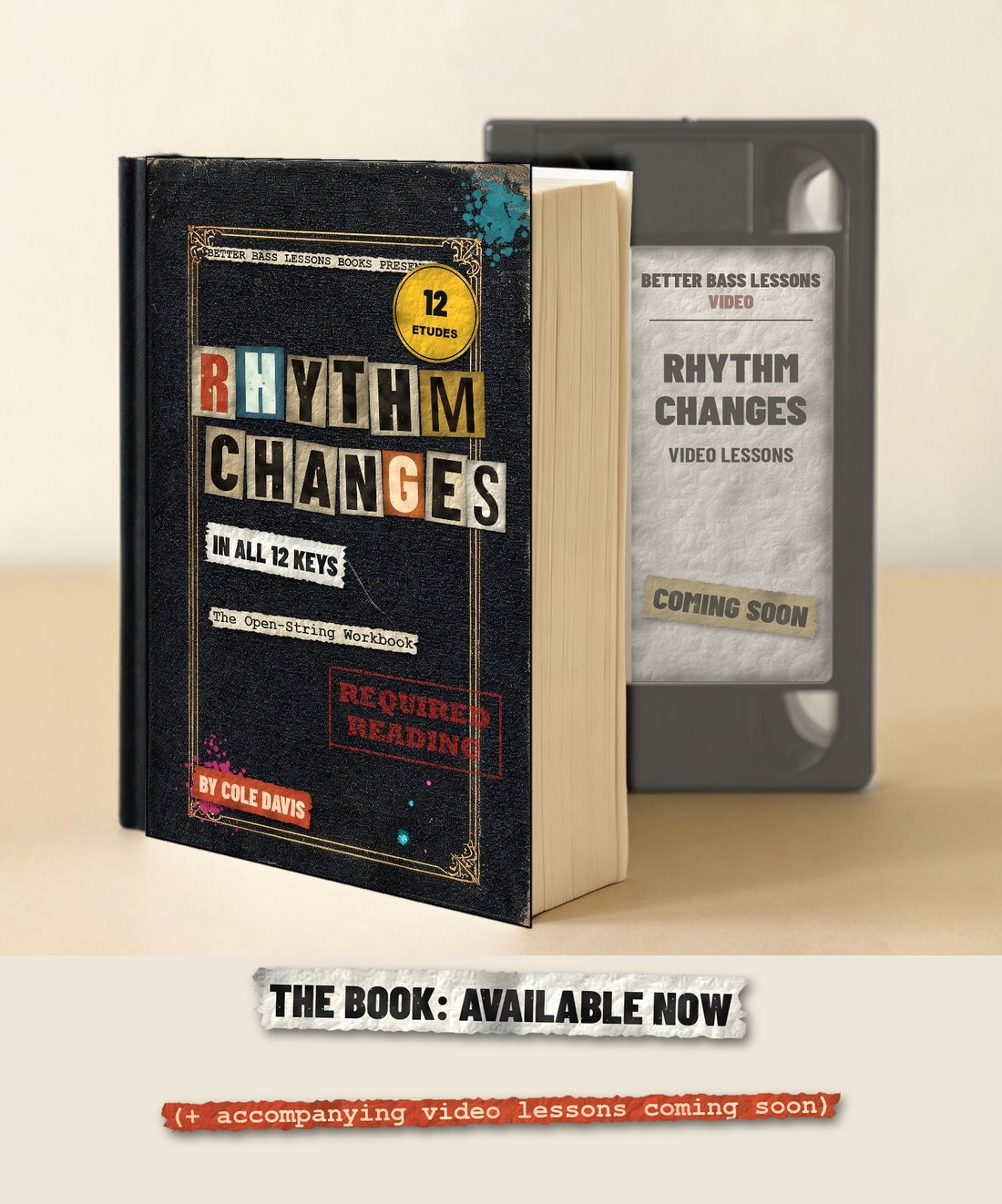
Rhythm Changes in All 12 Keys: The Open-String Workbook · By Cole Davis
One payment · Instant PDF download
Get the WorkbookOpen-string fingerings · 15 pages · 30-day money-back guarantee
Book-only price through Sunday, October 18. I’m recording video lessons for this book. When they go in, the price goes up to about triple. Buy this week and the videos are added to your account free when they’re ready.
An 8th-note etude for every key, fingered for upright, with the open strings opening up the bridge. The idea comes from the Storch etudes I studied at Juilliard with Gerald Cannon: connect your phrases with open strings.
Every change, in every key, instead of hovering around Bb.
Rhythm Changes is one of the hardest progressions to play accurately on bass.
Like most bass players, I've caught myself falling back on “bass-friendly” language. It can sound good. But it's an approximation of the changes. It isn't the changes.
So I got a little obsessed with playing every individual chord. This workbook is the result.
While I was at Juilliard, I studied the Storch etudes with the great Gerald Cannon. Most of our work was about playing them efficiently: finding the most logical path from one passage to the next. What I found was that the cleanest way to get from one phrase to the next was to connect them with open strings.
I love the Storch etudes. So I wrote three books with their logic in mind: the blues, Rhythm Changes and ii-V-I in all 12 keys. Then a fourth for the minor ii-v-i.
Rhythm Changes in All 12 Keys: The Open-String Workbook gives you an etude in every key, every note fingered, written so the open strings carry you across the neck.
“I find Rhythm Changes, if played accurately, can lend themselves to some really nice voice leading.”
Two real pages. Judge it before you buy.
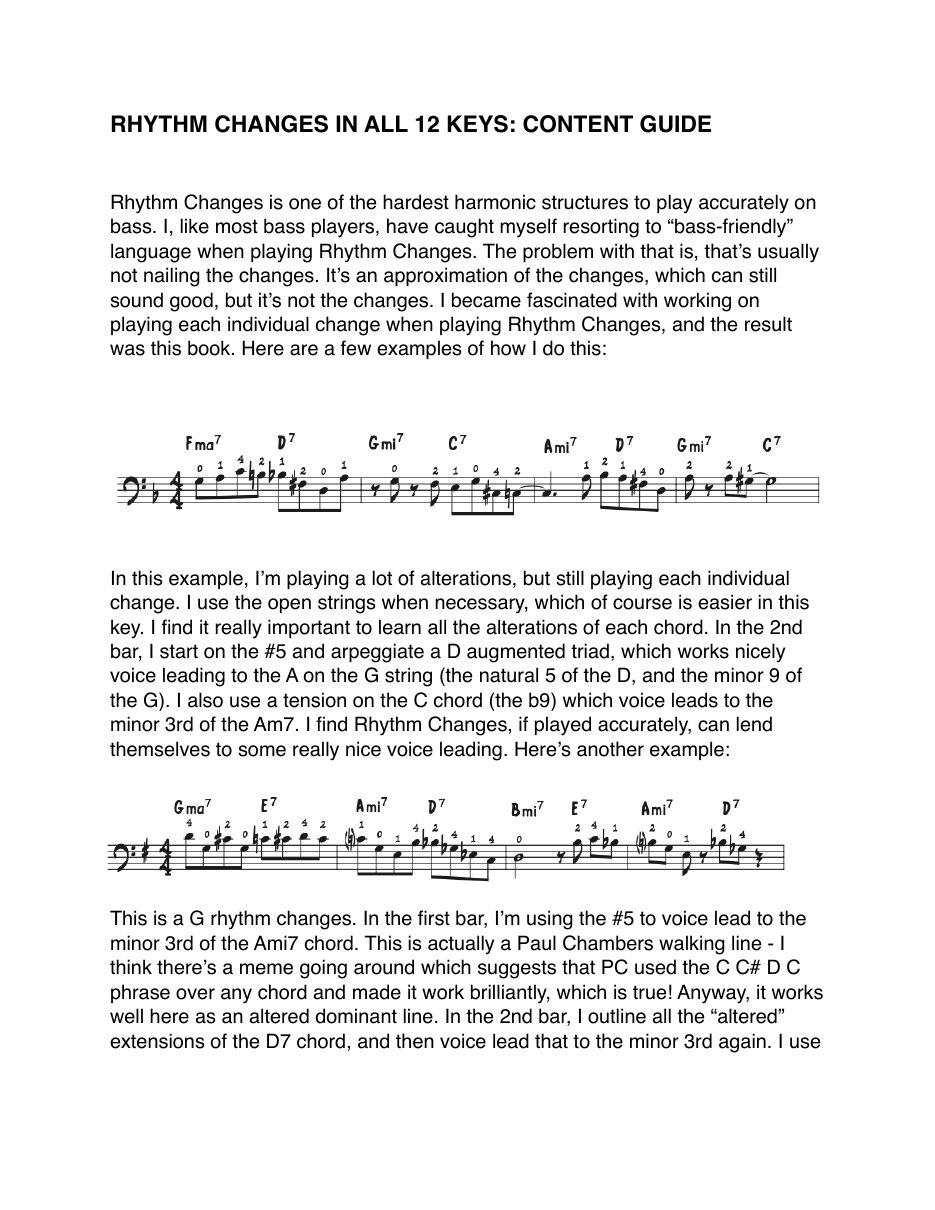
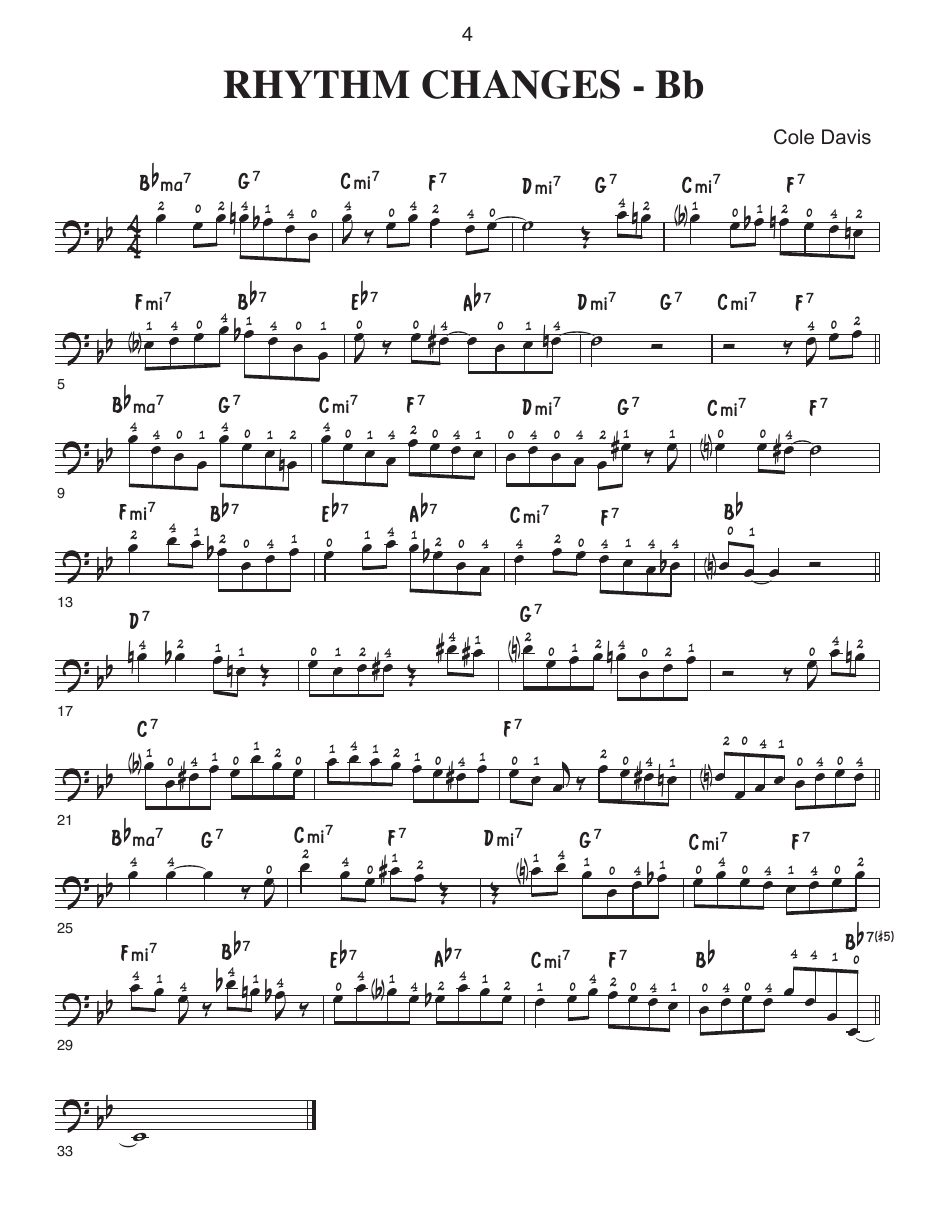
Here's some of what you'll get.
- Nail every change instead of hovering around the key. Each etude plays the actual chords, bar by bar.
- Start on the #5 and arpeggiate an augmented triad that voice leads straight into the next chord.
- A b9 that resolves to the minor 3rd of the next chord, the kind of voice leading accurate changes give you.
- Paul Chambers' C, C#, D, C phrase used as an altered dominant line. There's a meme that he made it work over any chord, and it's true.
- Free up the whole bridge with open strings so you can reach shapes like the b6 and #11 without leaving position.
- Take it a little “out” on purpose, then land on the #5 and resolve it in the last A section.
- Every key, fully fingered, Eb, G and all the rest.
And much more.
Rhythm Changes in All 12 Keys: The Open-String Workbook
Built for upright players who want it under their fingers.
- You play upright and can read bass clef.
- You play Rhythm Changes in Bb but you know you're mostly hovering around the key.
- You want 8th-note solo lines that actually lie well on the instrument.
- You're looking for walking bass lines. These are solo lines.
One payment. $15. Yours for life.
Twelve etudes, one per key, each fingered for upright so you're not working out a hand position on every bar. That's less than a dollar and a half a key.
Book-only price through Sunday, October 18. I’m recording video lessons for this book. When they go in, the price goes up to about triple. Buy this week and the videos are added to your account free when they’re ready.
One payment · Instant PDF download · 30-day money-back guarantee
The 30-day straight deal. Play one key a week for 30 days. If the flat keys don't feel easier, email support and we'll refund every penny.
Want all of them? Get all 8 books in the Complete Bass Playbook Library for $97, including this one. That’s $152 bought one at a time.
I'm Cole Davis.
I studied with Ron Carter, and I earned my Artist Diploma at Juilliard.
During a Groovekeeper Society masterclass, Russell Hall said this about me: “Cole's never been to Jamaica, but he can swing, because he understands how to make something beautiful.”
I write these books the way I wish someone had written them for me: on the upright, fingered, and without the jargon.
Questions before you buy.
Rhythm Changes in All 12 Keys
The Open-String Workbook
An 8th-note etude for every key, fingered for upright, with the open strings opening up the bridge.
$15 one time
Instant PDF download · Yours for life
P.S. Play the bridge first. That's where the open strings open up the most new sounds.
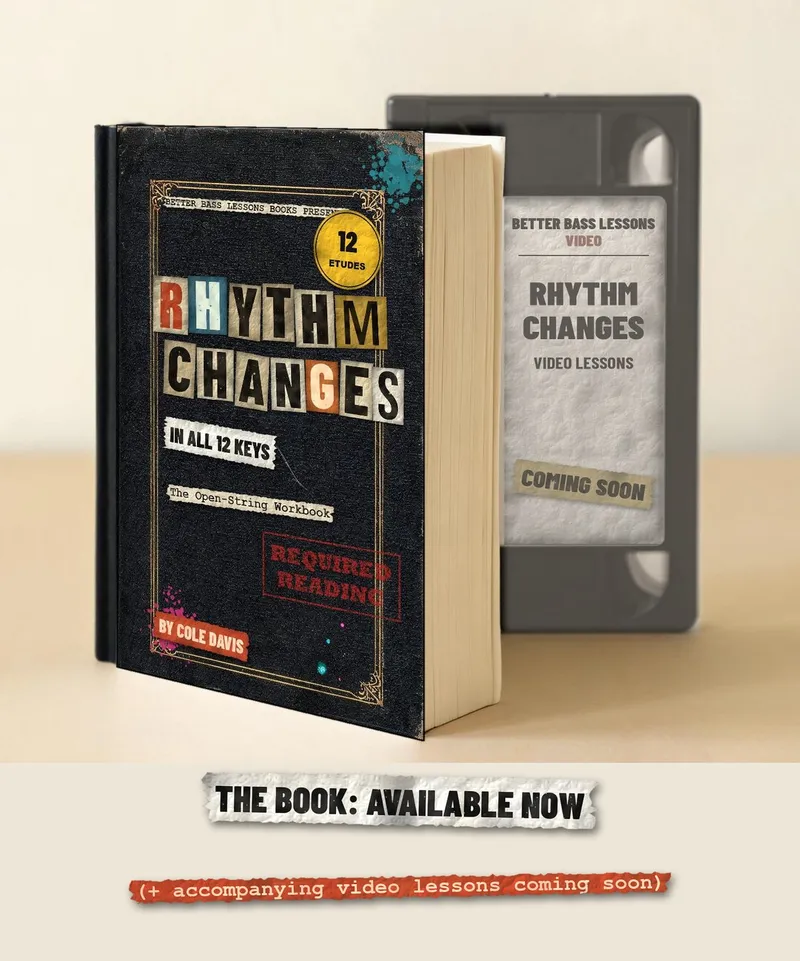
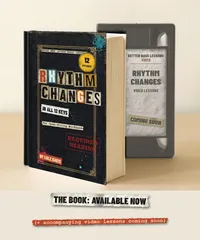
Rhythm Changes in All 12 Keys: The Open-String Workbook
$15.00
Quantity