Better Bass Lessons · Cole Davis · New York, NY
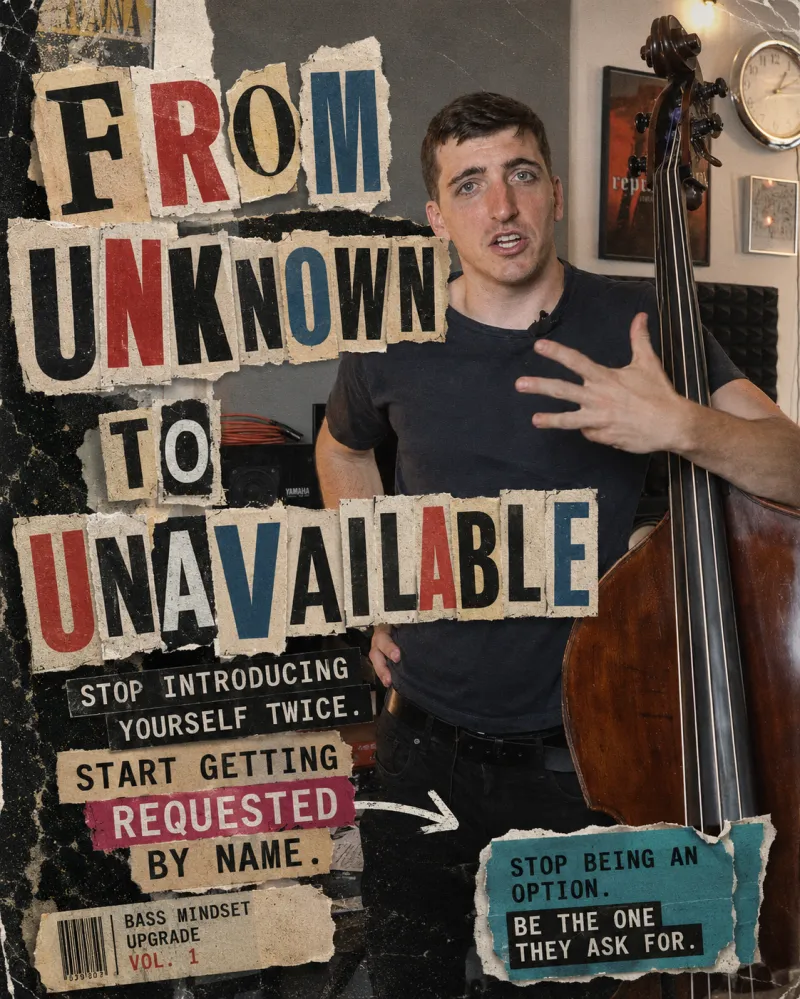
Better Bass Lessons Presents · A Field Manual from Will Lyle
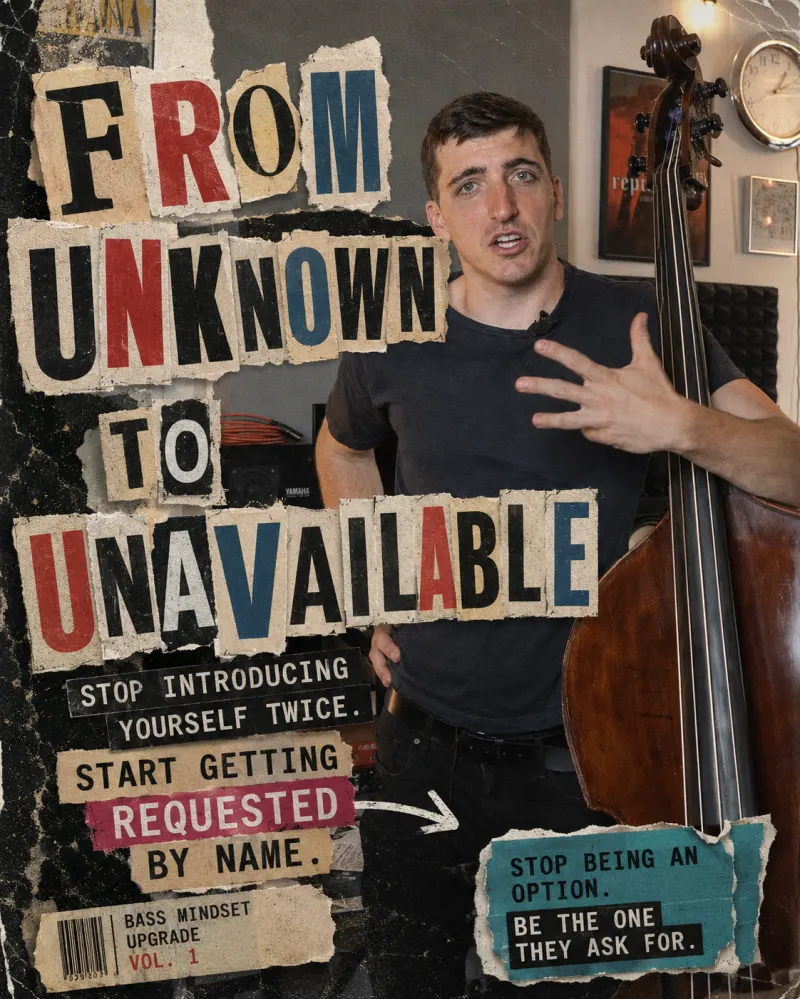
From
Unknown
to Unavailable
Stop introducing yourself twice. Start getting requested by name.
The unwritten playbook for bassists who can already play, but can't figure out why the phone isn't ringing.
$77 · one-time · lifetime access · 30-day money-back
The Pitch
How to stop being the bassist who's always available, and start being the one bandleaders have to fight to book.
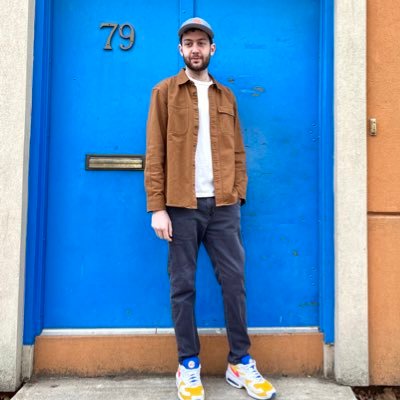
A Quick Note from Cole
I'm not the right guy to teach this. My friend Will is.
I get emails every week from bassists who can play. Really play. Years of work. Solid time, decent ears, real vocabulary. And they still can't figure out why the phone isn't ringing.
I'm not the right guy to teach this. I'm a teacher first, a player second. But I have a friend who is exactly the right guy.
Will Lyle moved to New York at 27 with sideman credits, international tours, and recordings under his belt, and had to start over from zero. He figured out the unwritten rules. The relationships. The unglamorous moves that actually open doors. He's now in the rotation at Smalls and Mezzrow as a sideman with the kind of players I grew up listening to.
I asked him to put everything he learned the hard way into a course. This is it. Read the note from Will below. It's his story to tell, and his playbook to share.
Cole Davis
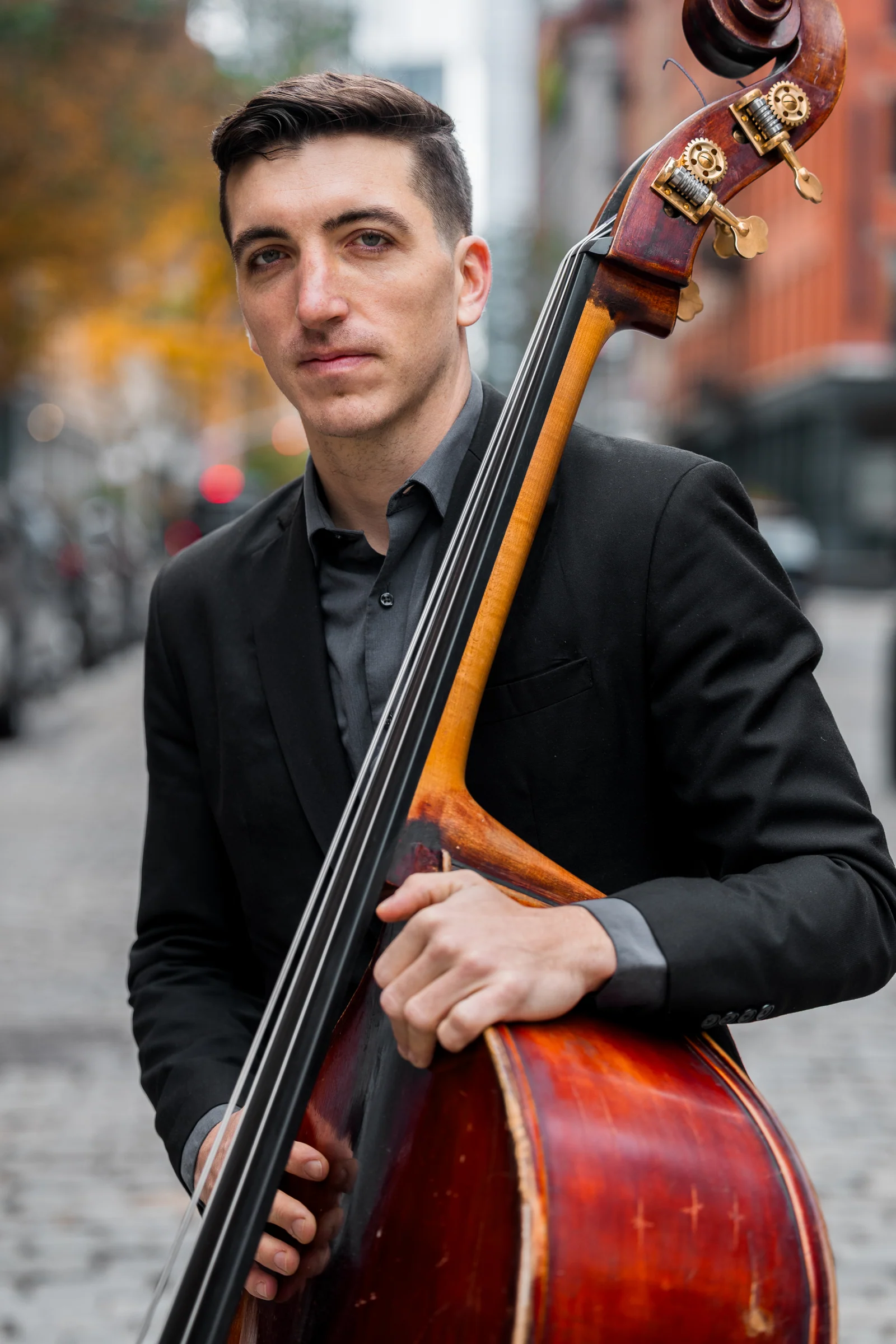
A Note from Will Lyle
I had the credits. None of it mattered.
I had a stack of credits when I moved to New York. I'd played in Japan, Indonesia, all over the country. Records out. Names on them you'd recognize. None of it mattered.
The credits I had in L.A. didn't translate. New York can be insular. I was thrust from "young firecracker" to small fish in a much bigger pond, and I had to start over completely.
What got me out of that (and into the rotation at Smalls, recording dates with Anthony Wonsey, gigs with players I'd grown up listening to) wasn't my chops. The chops were already there. It was a set of moves nobody teaches. The "lesson as audition" backdoor. The way the Wonsey gig actually came together over two years. The five-word sentence that quietly closes doors without you knowing it.
Cole asked me to put it all in one place. So I did.
One thing before you keep reading: the stories below are mostly New York because that's the scene I lived through. But the playbook isn't about New York. It's about how working musicians actually get hired in any scene.
Will Lyle
The full field manual.
Video Modules
From "Small Fish, Big Pond" through "What to Know Before You Arrive." Will walks through the scene math, the gig triangle, the long-game stories, and the non-negotiable preparation. Watch in order or jump around.
Workshop Replay
A full live workshop Will ran with Cole for a room of bass players: real questions, real situations, real answers. Included as bonus material with the course.
Jazz Standards List
Not the Real Book. The actual tunes that get called on real gigs in the rooms you want to play. The list Will built over years of showing up unprepared and never wanting to feel that way again.
What you'll actually do, in order.
Each module is a single move. Watch it, work it, then move to the next. Designed to be done over a few weeks, but you own it forever and can come back to any module at any time.
-
01
Small Fish, Big Pond
What nobody tells you about breaking into a competitive scene. Why location matters (proximity to clubs and jam sessions), how to build connections with touring musicians before you arrive, why your tolerance for the grind decreases with age, and what to do about it.
-
02
Survival Math
Expenses, income streams, and financial planning for working musicians. The real numbers (rent, food, transportation) and the "save twice what you think you need" rule. Will walks through his own financial journey transparently, including the pandemic and how he rebuilt through teaching, gigging, and an online business.
-
03
The $2,000 Mistakes I Made
Insurance, luthiers, and bass disasters you can avoid. Three gut-punch stories: a bass headstock hitting the ceiling on an escalator, slipping on wet subway stairs and cracking the neck, and a bass collapse in Washington Square Park from a light breeze. All uninsured or underinsured. Exactly what to do so it doesn't happen to you.
-
04
Context Is Everything
Uptempo lines, blues vocabulary, and playing what the gig needs. Will demonstrates economy of motion on Cherokee at 330 BPM, then breaks down chord tone targeting, using open strings to shift positions, and building tension without overplaying. Two completely different bass treatments on Rhythm Changes, side by side.
-
05
Getting in the Room
Shows, jam sessions, house sessions, and saying yes to everything. Why going to concerts is actually networking: Will got a two-week hotel gig from meeting a drummer at a Benny Green show, and got called by Dan Weiss after hanging at IBeam. Jam session etiquette (sign-up sheets, when to approach the stage, how to ask to sit in), and the difference between the kinds of rooms.
-
06
The Long Game
Two stories about patience, persistence, and not taking it personally. The heart of the course. Will traces the exact chain that led to his first Smalls gig: a random singer gig in Staten Island → meeting pianist John Cogliano → paying for a lesson (which is really an audition) → getting called for Wayne Henderson's band → meeting Philip Harper → finally Smalls.
-
07
The Gig Triangle
Art vs. money, leading gigs, and who to call when. The gig triangle: music, money, and hang. Aim for two of three. Accept one of three only when you're starting out. Say no when it's zero. Why going full mercenary (weddings, private events) backfires, and how Will keeps the mix right.
-
08
What to Know Before You Arrive
Repertoire, transcriptions, and the non-negotiable preparation. The work nobody can do for you. The standards you need to know cold, the transcriptions that matter, and the practice habits that separate the bassists who get called back from the ones who don't.
+ Workshop Replay · Jazz Standards List
Is this for you?
On the Roster
- You can play, but you're not getting called as much as you should be
- You watch the same five players in your scene get all the calls and wonder what they're doing differently
- You're tired of jam sessions feeling like running into the same wall
- You want the gig calculus, not just the licks
- You're willing to do the unglamorous work that actually moves the needle
- You're considering a scene change, or just want to crack the one you're already in
Benched
- You're a beginner who doesn't have basic playing chops yet
- You're looking for shortcuts or "growth hacks"
- You want a magic networking script that skips the relationship work
- You think "talent should be enough"
Will Lyle
Smalls · Mezzrow · Anthony Wonsey
Will Lyle is a New York City jazz bassist. He started his career on the West Coast, with international tours through Japan, Indonesia, and the US, and recordings with established names. At 27 he moved to New York and rebuilt his career from zero, figuring out, over the next several years, the unwritten rules of how the scene actually works.
He is now in the rotation at Smalls and Mezzrow as a sideman with established players, and records regularly with pianist Anthony Wonsey. From Unknown to Unavailable is the field manual he wishes someone had handed him the week he landed in New York.
- NYC sideman: rotation at Smalls & Mezzrow
- Recording artist: Anthony Wonsey dates
- International touring: Japan, Indonesia, US
- Career rebuilt in NYC at 27
One price. Own it forever.
$77one-time · lifetime access
- ✓8 video modules taught by Will LyleCore
- ✓Workshop ReplayBonus
- ✓Jazz Standards List (PDF)Included
- ✓Instant access: all 8 modulesToday
- ✓Lifetime access & free updatesForever
How this works.
One-Time Payment
No subscriptions. No recurring fees. Pay once and it's yours.
Lifetime Access
Come back whenever. Your progress, your pace, your schedule.
We'll Make It Right
Any problem with access or content, email us. We respond fast.
30-day money-back guarantee.
Watch every module. Try a move or two. If the playbook doesn't give you a clearer path to the call sheet within 30 days, email support and we'll refund every dollar. No questions.
Questions From The Stands.
Yes. The stories happen in New York because that's the scene Will lived through, but the playbook itself (the relationship mechanics, the lesson-as-audition move, the gig triangle, the "yes to everything" rule, the unwritten etiquette of getting called back) works the same in any scene with players who get the calls and players who don't. Which is to say, every scene.
The frameworks transfer. Will's specifics are jazz-scene specifics, but the underlying mechanics (building a reputation, the lesson-as-audition backdoor, professional etiquette, the gig triangle) apply to any genre where calls happen between humans. R&B, country, theater, gospel, rock: the same playbook works.
Jam sessions are one tool. They are not the playbook. Most bassists go to jams, play, leave, and wonder why nothing happens. The course covers what actually moves the needle, and which jam-session moves are wasted effort. Will spent years figuring out which efforts mattered and which didn't. The course is that map.
One-time purchase. $77. Lifetime access. No subscription, no auto-renewal.
Instant access after checkout. All 8 video modules, the workshop replay, and the Jazz Standards List are available immediately. Watch on any device.
No. The playbook is about how scenes work, not about being a young firecracker. Will rebuilt his career in his late twenties; the moves work just as well at 40, 50, or later. Reputation and relationships compound at every age.
30-day money-back guarantee. Watch every module. Try a move or two. If the playbook doesn't give you a clearer path to the call sheet, email support within 30 days for a full refund.
Last Word
Stop being
"the new guy." Start being the bassist who gets booked.
The one who quietly gets the calls while everyone else is still introducing themselves twice.
Claim your spot: $77One-time payment · Lifetime access · 30-day money-back
A few of you have asked whether this course is only useful if you live in New York. It isn't. Will's stories happen there because that's where he lived through them, but the actual playbook (the relationship mechanics, the lesson-as-audition move, the gig triangle, the "yes to everything" rule, the unwritten etiquette of getting called back) works the same in any scene with players who get the calls and players who don't. Which is to say, every scene. Just wanted to put that out there.