GROOVEKEEPER LAUNCH  ·  BASS & DRUMS WITH AARON SEEBER  ·  LAUNCH PRICING ENDS …

The Locked-In Bassist

Swing with any drummer · Cole Davis & Aaron Seeber

How to lock in with any drummer who counts it off.
Even the ones who rush, drag, and throw fills at you.

  • Ron Carter Bass Comp. Winner
  • NEA Future Jazz Master
  • Bassist · Lambchop
  • Drums: Aaron Seeber
  • Aaron has played with Buster Williams
↓  Here's the story
STOP FOLLOWING★ OWN THE TIME★ GET CALLED BACK★ STOP FOLLOWING★ OWN THE TIME★ GET CALLED BACK★

Dear Groovekeeper,

If you'd like to stop getting run over by drummers, and have the time come from you the way it did for Sam Jones and Paul Chambers... then this letter will show you how. And why you can do it on your very next gig.

Here's the story:

When I was coming up, I was the bass player who lost the one. A drummer would throw a fill, I'd get distracted, and it would take me four, eight, sometimes 16 bars to find the time again.

So I did what almost every bass player does.

I blamed the drummer.

It took me years to figure out what was really going on. And chances are, it's the opposite of what you've been told. Because here's the advice every bass player hears:

  • "Follow the drummer."
  • "Just play to a click."
  • "Lock in with the kick drum."
  • "Figure out how far behind the beat you're supposed to sit."

Sound familiar? Maybe you've tried all of it. You talk to the drummer, and nothing changes. You go with him when he pushes, and the tune ends twice as fast as it started. You hold steady, and somebody asks why you're dragging.

Here's why none of it works:

The closer you follow the drummer... the faster your time falls apart!

Think about how you practice. A metronome. A backing track. A play-along. What do they all have in common?

They never move.

So you learn to follow them. And following works perfectly, right up until the thing you're following is a human being who pushes, drags and throws fills across the bar line.

Which is why your time sounds great in the practice room and falls apart the second a real drummer counts off. Your time was never yours. It was borrowed.

That's not a talent problem. You were taught to follow.
Why he turns them down

The drummer isn't keeping the time. He's listening for yours!

I made this course with Aaron Seeber. He's recorded with Peter Washington and played with Buster Williams and David "Happy" Williams.

But forget about that for now. It's not all that important.

What is important is this:

When Aaron gets called for a gig with a bass player he doesn't like playing with,
he'll very often turn it down.

Why? In his words, because "the time itself wasn't good."

▶  0:20 · Hear it straight from the drummer

Now think about what that means for you. Every drummer you've ever sat in with gets to make that same call. Most of them will never tell you they made it.

So what is he listening for?

When you follow him, nobody is keeping the time!

Sounds backwards, doesn't it? Most bass players have been taught the exact opposite. (Aaron's exact words: "To me, the time comes from the bass player.")

You're both waiting on each other, and the tune drifts.

And when you hold it? A good drummer does something most bass players never expect.

He follows you. (Ask Aaron what he does when the bass player drags, and he'll tell you: "Honestly, I just follow.")

▶  1:41 · Watch who adjusts to whom

Jimmy Garrison understood this. When Coltrane stacked substitutions over the changes, did Garrison chase every one of them? Of course not. He played the roots, and that's why it sounded great.

Be the bass player he calls back.

$97 $67
Get The Locked-In Bassist · $67

Why your practice room can't fix this

Why no metronome can teach you this part (and what can).

You've put in the hours. But there's one thing no metronome, no backing track and no walking course can teach you, including mine: what to do when the time is coming from a person who moves.

So Aaron and I did something you don't see in bass courses.

We broke it on purpose.

  • I had him throw fill after fill across a blues, far more than he'd ever play on a gig. I stayed put, and the time didn't move.
  • I dragged on purpose to see what he'd do. He came with me, and it still felt good.
  • Then he fought me instead. You'll hear exactly how bad that gets.
  • Then he wandered all over the time. I took charge and pulled it back.

You watch every one of those moments go wrong and then get fixed, from the bass chair and the drum chair. And it's the best-produced course we've ever made, so you can see and hear every detail.

Here's what that looks like for you.

Let's say you're two choruses into a blues at a jam. The drummer drops a press roll into bar 12 and lands a hair late. What do you do?

Most bass players look up, chase the fill, and spend the next eight bars hunting for the one.

After Lesson 7, you'll do the opposite. And the band will land on your one.

In fact, don't take my word for it. Watch the whole lesson right here, free:

▶  Full lesson · 4:02 · Free

What's inside

Here's a small taste of what you'll discover.

  • The 2-minute test that tells you whether your time is really yours, or borrowed. (No metronome, no drummer, no track. My rule: if it doesn't feel good to you, it won't feel good to anyone else.)
  • What to do in the very next bar when the drummer throws a fill across the bar line. (This one mistake used to cost me 16 bars at a time.)
  • Why "how far behind the beat should I be?" is the wrong question. (Ray Brown and Paul Chambers sat in different places and both swung like crazy. Here's what they had in common instead.)
  • What to do the moment the drummer starts to drag. (Holding steady isn't enough. Here's what actually pulls the band back to you.)
  • The non-musical move that fixes time problems "90 to 95 percent of the time." (It starts before you play a single note. Bandleaders say their favorite rhythm sections do it.)
  • The simple trick a great drummer taught Aaron for the nights nothing is locking in. (It sounds silly. Aaron says it's worked for him a lot of the time.)
  • How to stay in the pocket once you find it, by thinking the way Billy Hart does. (Hint: it has nothing to do with the bar you're in.)
  • Why a plain two-feel under brushes "doesn't sound like anything," and the three rhythms that make it swing. (Perfect for the casuals and singer gigs where the drummer never picks up sticks.)
  • The Art Blakey trick for swinging a tune in 3/4. (He played the ride cymbal in four. Here's why it works, and what your line does underneath it.)
  • The Charlie Parker record that screws students up "almost every single time." (If you've ever played along with Bird and felt lost, this is why. It isn't your time. You're following the wrong guy.)
  • Why Sam Jones sounded like Sam Jones no matter which drummer was behind him. (And how to get that same quality into your own time.)
  • Plus: The Laws of Swing PDF. All ten laws on a page each, with one thing to try this week.
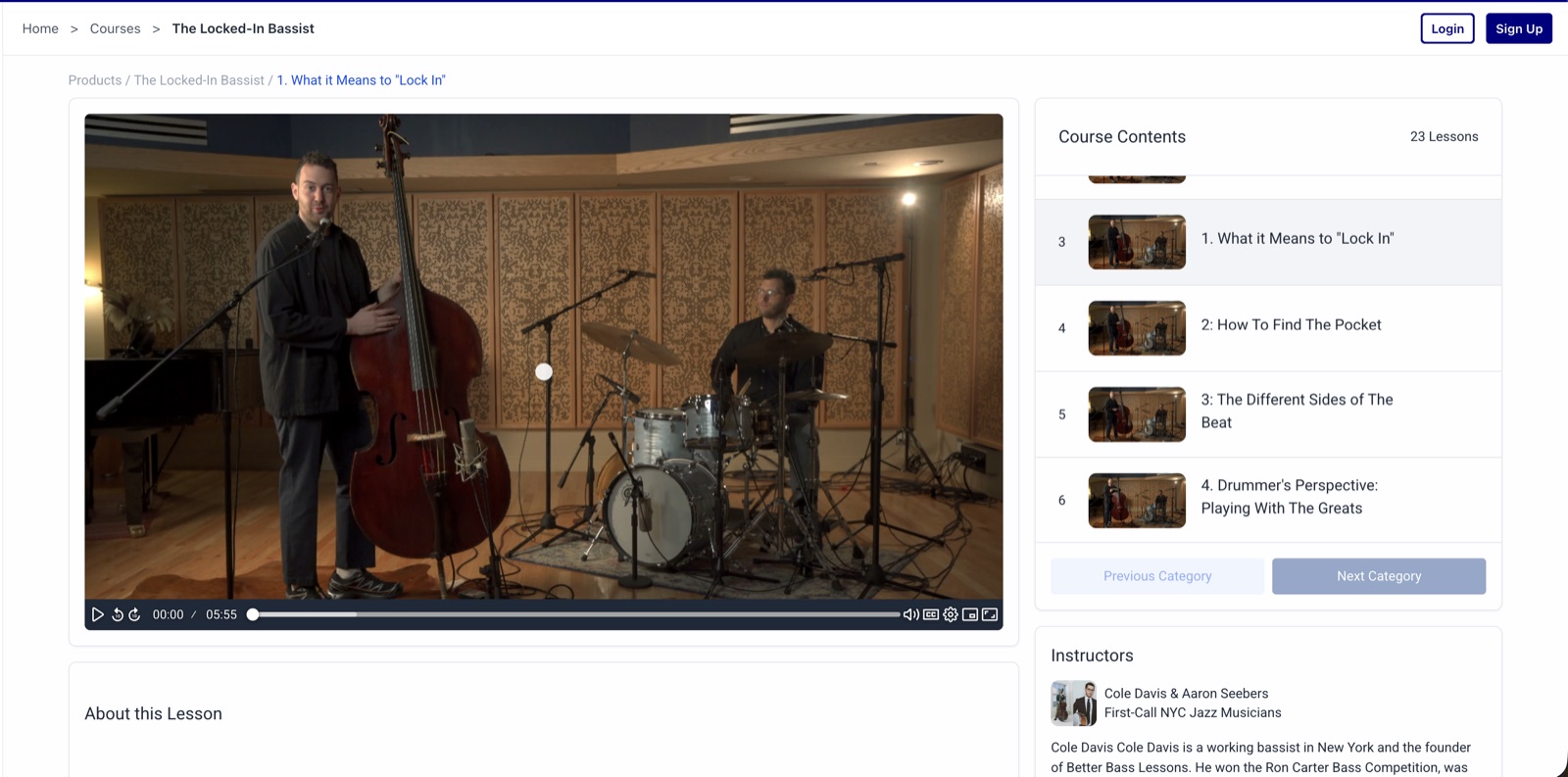
The Locked-In Bassist course dashboard showing the lesson list
23 lessons inside the course
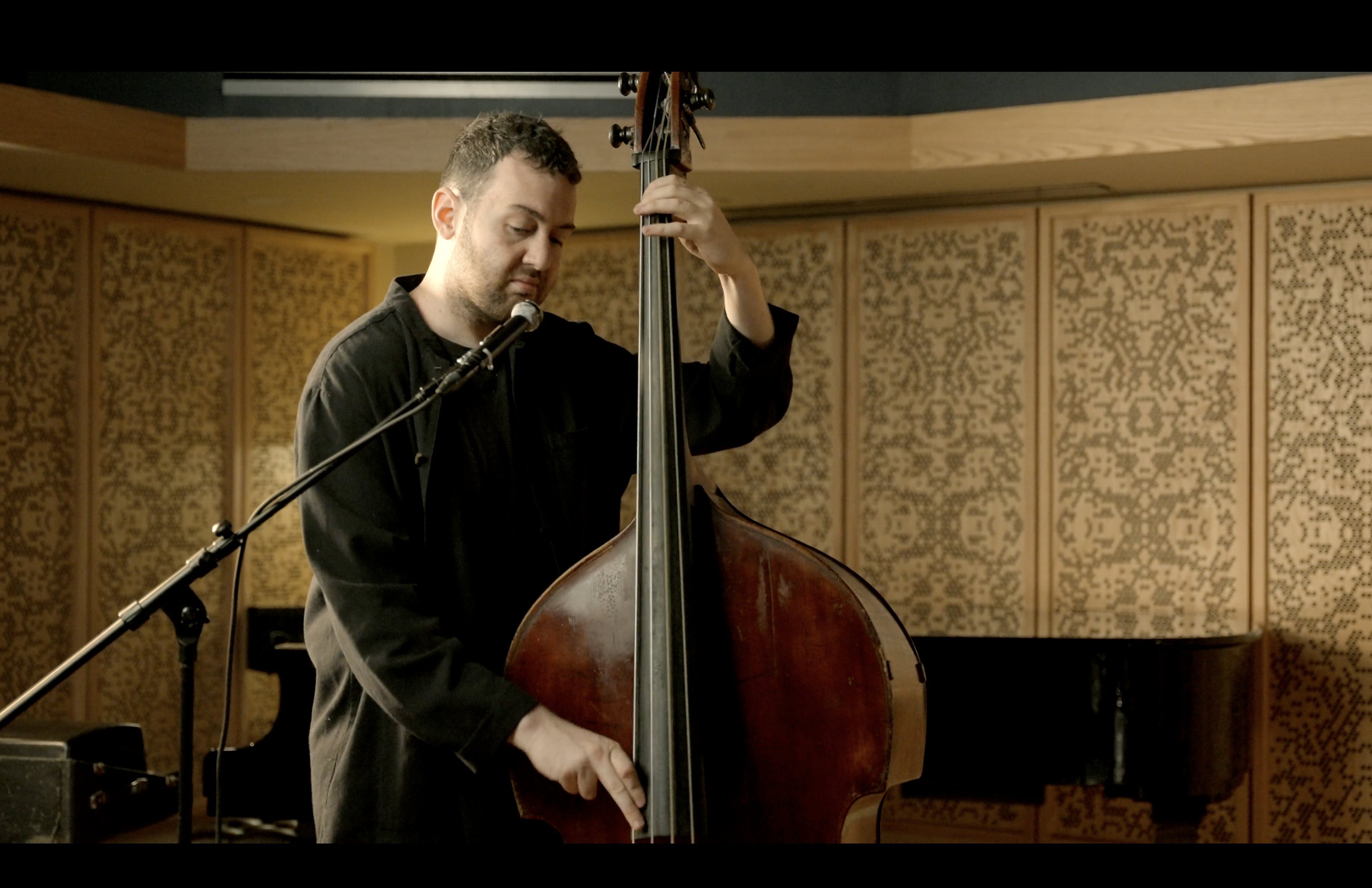
Cole Davis playing upright bass in the studio
Shot in the studio, so you see every detail
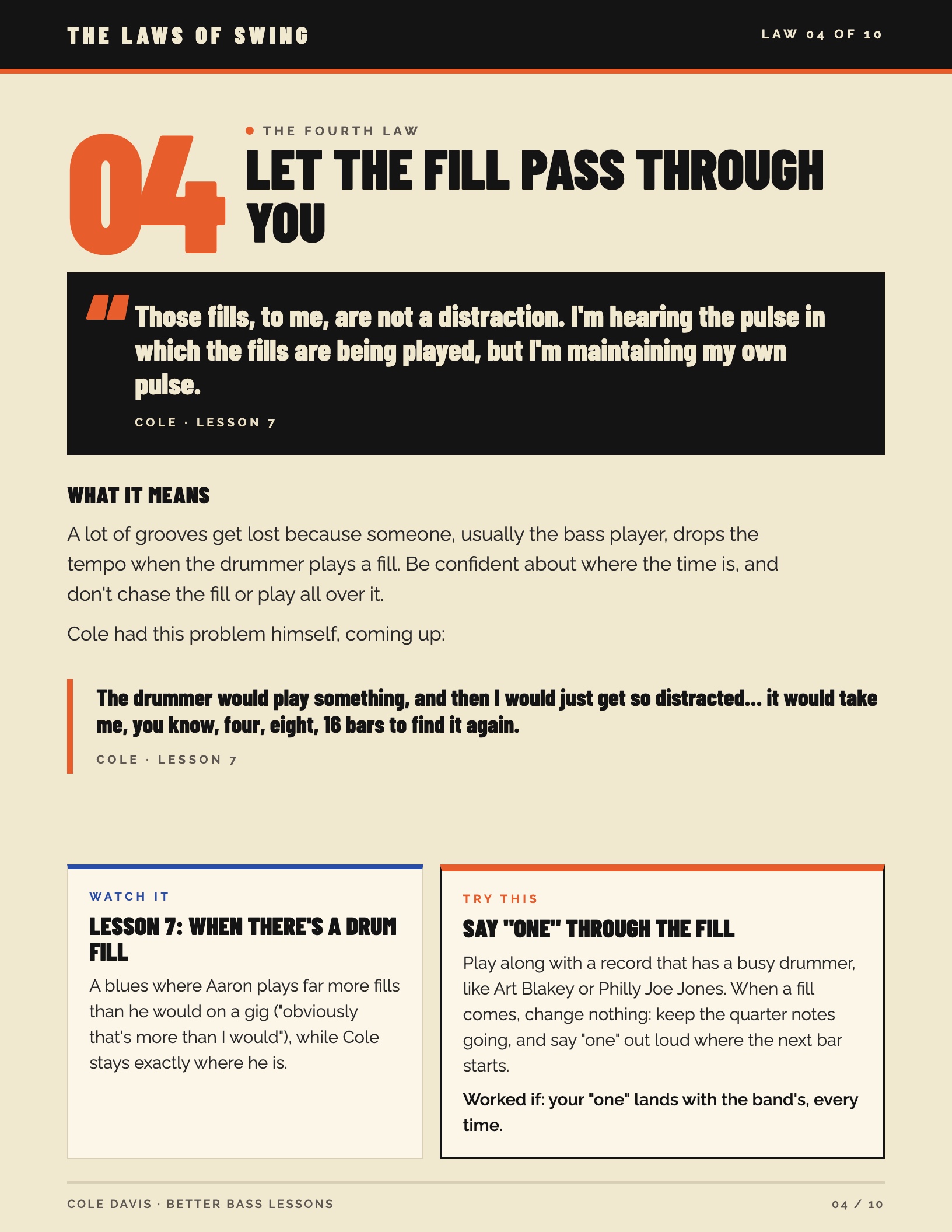
Law 4 page from The Laws of Swing PDF
A page from The Laws of Swing PDF

The complete curriculum

Here's everything inside, lesson by lesson.

That was a taste. Here's the whole course, and a few of the things you'll discover in every lesson.

Part One Locking in

01 What It Means to "Lock In"

  • The strange reason obsessing over where you sit on the beat can make it harder to lock in with a drummer. (If you've ever tried to line your quarter note up with the drummer's to the millisecond, read this one twice.)
  • How you and a drummer can both sit way behind the beat on purpose... and still sound completely locked in. (It's the same thing that makes D'Angelo's Voodoo feel lazy and locked in at the same time.)
  • The one player on the bandstand who tells you whether you're locked in, long before the bandleader ever will. (And it isn't the drummer.)
  • How to lock in with a drummer who puts the beat somewhere completely different from the last drummer you played with... without chasing where he puts it.
  • The question to ask yourself on the bandstand that's far more useful than "am I on the beat?" (Answer it honestly and you'll know within a few bars whether the tune is working.)

02 How to Find the Pocket

  • A drill with no count-off that makes it almost impossible to over-analyze the beat. (Cole did it with drummers constantly in school. You can do it with any drummer willing to try it.)
  • What to do when the drummer picks a tempo you'd never choose. (Watch Cole lock in cold at what he calls "probably the hardest tempo.")
  • The panic reaction that turns one shaky bar into a lost tune. (If you've ever missed the pocket on beat one and thought "all is lost," you've done it.)
  • Why some of the greatest jazz records ever made don't lock in right away... and what that means for the first few bars of your next jam.
  • How to share the time with any drummer the way a great string quartet shares it, so the groove belongs to both of you instead of a tug-of-war.

03 The Different Sides of the Beat

  • Why obsessing over "ahead, behind or in the middle" of the beat "does more harm than good"... and what Cole and Aaron focus on instead. (Neither of them spends a second measuring.)
  • How to walk into any session, with any band, and make the time feel good. (Cole ranks it above great bass lines and great solos. If you've ever played all the right notes and the tune still never took off, start here.)
  • Why Philly Joe Jones sounds like a rubber band and Jimmy Cobb sounds "pointed"... and how to lock in with either one without deciding who's ahead or behind.
  • Three Ray Brown records that expose exactly what a drummer does to a bass player's sound. (Same bass player. Three completely different rhythm sections. Once you hear what changes, you'll start hearing it on every record you own.)
  • How to get a Ray Brown feel even if you naturally play behind the beat. (If you think Ray Brown's secret was playing on top of the beat, you're in for a surprise.)
  • How to get the drummer to put the time "in one place" without saying a single word to him.
  • How to play loose like the Kind of Blue rhythm section, "all sides of the beat at once"... without ever sounding sloppy.
  • The tiny change in note length that turns a polished studio feel into a loose, swinging one. (Hear Cole flip between the two in the same lesson.)
  • What to decide before the count-off that most bass players never think about. (Get it wrong and even a great feel sounds out of place.)
  • Why copying your heroes' beat placement means copying the wrong thing. (What Cole says to imitate instead fits in a single sentence.)

04 Drummer's Perspective: Playing With the Greats

  • How to make a drummer feel like he's "sitting in a luxury car and the car was just driving itself." (That's how Aaron describes recording behind Peter Washington. It's the feeling that gets a bass player called back.)
  • What great bass players do that means the drummer never once has to wonder "am I pushing or am I dragging?"
  • How to make even a nervous drummer's hardest gig feel easy, at any tempo. (Aaron's most nerve-racking gig at Smalls turned into the easiest of his life. David "Happy" Williams was on bass, and what he did at blazing tempos is what you want to do at yours.)
  • How to make every player on the bandstand sound better without playing a single extra note.
  • The fastest way to strengthen your own beat, and it doesn't happen alone in the practice room.
  • What makes a bass player the one a drummer still talks about years later. (Aaron still remembers the way one bassist's hand moved when Aaron was growing up.)

05 How Drummers Adjust to Bass Players

  • How the length of your quarter note quietly changes the way the drummer plays his cymbal. (Long and wide, or short and thumpy? Aaron adjusts to both.)
  • What a good drummer actually does when you rush. (It's probably not what you'd expect, and it puts a lot more on your shoulders than you might think.)
  • The controversial rule a lot of jazz drummers were taught about a dragging bass player. (Hal Galper taught it to Aaron. If your time ever drifts, you need to know it.)
  • Why trying to have the biggest beat on the bandstand can backfire on you, and what even the older cats encourage instead.
  • How to build the kind of independent time Ray Brown talked about, so you're never at the mercy of whoever is behind the kit.
  • Why following the drummer doesn't just hurt you. It hurts him too. ("The drummer has their own problems.")
  • The one thing that makes a live band sound like it's playing along to a metronome. (And it can happen even when everyone's time is good.)
  • Who's really adjusting to whom in a rhythm section. (Cole noticed it after years of live shows and records. It changes who's responsible for the time.)

06 How Bass Players Adapt to Drummers

  • A one-chorus test you can do tonight, alone, that shows you whether your time is ready for a real drummer. (No metronome. No track. No drummer.)
  • How to adjust to a drummer by doing the exact opposite of what every bass forum tells you to do. (Watch Cole do it with Aaron on camera, and listen to what happens to the groove.)
  • What pianists secretly want from you when they start playing hip substitutions. (Jimmy Garrison knew. Coltrane was stacking superimpositions right on top of him.)
  • How to hear every single thing the drummer plays without getting sucked into it.
  • How to hold your ground while the drummer moves all over the kit, the way a defensive midfielder holds his position. (Once you see it this way, you'll stop chasing everything the drummer plays.)
  • Why a working New York drummer is listening to you for the time, and what that means the second the count-off ends. (Once it clicks, you'll stop waiting for the drummer to fix the time.)

07 What to Do When There's a Drum Fill

  • The kind of drum fill that throws bass players off the most, and how to stay put through it. (It isn't a trade. It isn't a solo. It's a lot smaller than that.)
  • Two completely different ways to respond when the drummer crashes on the end of four... and why both of them are right.
  • Why doing less during a fill can be the most powerful thing you do all night.
  • How to stay put while a drummer buries you in fills. (Aaron throws far more at Cole than he'd ever play on a gig. Watch what happens to the time.)
  • What Cole hears during a fill that most bass players miss completely. (If you've ever looked up at a fill and looked back down to find the one gone, this is why.)
  • The problem that used to cost Cole "four, eight, 16 bars" every time a drummer played something. (If it's happening to you, it's fixable.)

08 What to Do When It's Not Locking In

  • The mindset shift that can make a bad groove feel "infinitely better right away." (Cole spent years doing the opposite. When he finally flipped it, the groove got better right away, even with the same players he used to blame.)
  • A way to tell the whole band "the bass player's in charge" in the first bar, without saying a word.
  • What to do when you're sitting in with a nervous drummer and nothing is locking in, so he relaxes and the time settles. (Drummer Matt Wilson taught it to Aaron. It sounds almost too simple to work.)
  • Why most time problems have almost nothing to do with time. (Cole and Aaron put the number at 90 to 95 percent.)
  • The off-stage habit bandleaders say their favorite rhythm sections share, and how it can help you lock in before the first tune.
  • Six words that can rescue your time on a rough night. (Even if you drove through a storm to get to the gig.)
  • Push or follow? A bassist and a drummer disagree on camera about what to do when it won't lock in. (You'll want to hear both answers.)
  • Why the drummer can get blamed for a tempo that was really the bass player's doing, and how to keep it from happening on your gig. (Aaron has had this exact conversation with bandleaders.)

09 How Bass Players and Drummers Solve Problems Differently

  • Who should fix the time when it drifts, you or the drummer... and what happens to the tune when you guess wrong.
  • Hear what happens when a drummer fights a dragging bass player instead of going with him. (Then compare it to the version where he doesn't.)
  • What to do the moment the drummer starts wiggling all over the time.
  • Why you're the one steering the band, even when it isn't your gig. (Aaron's philosophy explains why Miles's band sounded like a different band with Philly Joe than it did with Tony Williams.)
  • The hidden time problem that can wreck a gig even when the bass player and the drummer are both solid.
  • Why nights that won't lock in happen "at every level, up until the professional New York City level"... and what to do on yours. (Unless you make it to the NBA, so to speak.)
  • Why there's no single fix for a groove that won't lock in, and how to choose in the moment.

10 What to Do When You Find the Pocket

  • Why so many players lose the pocket in the exact moment they finally find it.
  • How to keep a groove building chorus after chorus by thinking the way Billy Hart does. (He's thinking so much further ahead than the next bar it almost sounds impossible.)
  • Why your metronome practice matters most on the night the pocket finally shows up. (It's a Nicholas Payton idea.)
  • The superstition that can jinx a great groove the second you notice it. (Cole had it for years.)
  • The simplest test for whether you've actually found the pocket. (No metronome, no recording, and no nod from the drummer required. Once you know it, you'll stop second-guessing yourself in the middle of a tune.)

Part Two When there's no ride cymbal

11 Two-Feel: How Bass Players Swing in Two

  • What brushes on the snare quietly take away from you that a ride cymbal gives you for free, and how to put it back.
  • The plain two-feel almost every bass player defaults to under brushes... and why Cole says it "doesn't sound like anything." (If your two-feel ever feels draggy, start here.)
  • Three rhythms that bring a lifeless two-feel back to life. (One of them is called the "big four.")
  • How to keep your two-feel from sounding like "the metronome again."
  • The two-feel habit Paul Chambers, Israel Crosby, Bob Cranshaw and Percy Heath never fell into. (If your two-feel sounds polite but goes nowhere, you probably have it.)

12 Two-Feel: What Drummers Want From Bass Players

  • Where the drummer hides the bounce in a two-feel, so you know exactly what to lock in with. (It isn't in his hands.)
  • Why a two-feel really comes from the bass player, not the drummer. (A lot of great drummers, Art Blakey included, don't change a thing when the band goes to two.)
  • The Papa Jo Jones brush pattern, and how to lock in with it.
  • How to drop into two while the drummer stays in four... and make it sound like you planned it.
  • The New Orleans secret that lets you and the drummer both move in a two-feel without tripping over each other.

13 Interaction Between Bass and Drums in a Two-Feel

  • Why what you're doing in a two-feel isn't really "filling" at all. (Think of it as filling and you'll almost certainly overplay.)
  • Why your rhythmic language is supposed to sound nothing like the drummer's.
  • How bass and drums build the same kind of counterpoint you hear in classical music... except with rhythm.
  • How to keep your variations from colliding with the drummer's, even when you're both moving at once.
  • Watch a full two-feel with both players variating, and listen for the moment it all locks.

14 Locking In Without Sticks or Cymbals

  • How to keep a four-feel moving behind a singer, without the sticks and cymbals. (Singers love this, by the way.)
  • What to lock in with when the drummer is playing brushes in four. (It's there. You just have to know where to listen.)
  • The one thing that can't change whether the tune is at 60 beats per minute or 400.
  • How to tell when the bass drum is holding up the structure and when it's just talking.
  • Why you don't need to know hundreds of brush patterns to lock in on any brushes tune. (Aaron, who plays a lot of brushes, uses about five.)

Part Three Swinging in 3/4

15 Playing in 3/4 (Part 1)

  • The easiest way to swing a jazz waltz. (You already know how to do it. You just have to take something away.)
  • The heavy 3/4 feel that feels almost like 6/8, and when to reach for it.
  • How many different ways there are to feel "one, two, three"... and how to tell which one the drummer is using.
  • How to lock in with a drummer who plays the ride cymbal the strange way Art Blakey did on tunes in three. (It's so counterintuitive even Aaron has to count it out on camera.)
  • How to make the "church" bass line on "Up Jumped Spring" feel good. (It's almost nothing. Cole says it's really difficult to feel.)

16 Playing in 3/4 (Part 2)

  • Why the empty middle of the bar in a church-style 3/4 is so hard to feel.
  • Why trying to play "open" in 3/4 can quietly kill the groove, and what to do instead. (Especially if you love the Bill Evans trio.)
  • How to keep a waltz from drifting into "very open, kind of disorganized playing."
  • The decision you and the drummer need to make before a tune in three even starts. (Art Blakey made it for "Up Jumped Spring.")
  • What you can do in three that's hard to pull off in four.

Part Four Playing along with the records

REC The Records: How Bass Players Respond to Different Drummers

  • How to keep your time rock steady no matter what the drummer's ride cymbal is doing.
  • How Sam Jones sounded exactly like Sam Jones behind two drummers with completely different ride beats. (One of them is Roy Brooks on Blue Mitchell's Blue's Moods, and his ride beat is almost dead straight.)
  • The part of every drummer's ride cymbal beat that gives him his identity... and why it never has to get in your way.
  • Two opposite ways to take charge of the time. (Paul Chambers did one. Ray Brown did the other.)
  • How to let the drummer be himself while you do your job underneath him.

REC The Records: How Bass Players Should Play Along to Records

  • The question to ask about the bass player on every record you practice with. (Ask it once and you'll never play along the same way again.)
  • The Charlie Parker record that throws off almost every student who plays along with it. (If you've ever felt lost playing along with Bird, it isn't your time. You're following the wrong person.)
  • Why the bass sounds like it's pushing so hard behind Dexter Gordon on Our Man in Paris. (The bass player didn't decide to play ahead.)
  • The moment the time quietly shifts when Miles takes over from Bird... and what the bass player does about it.
  • Why the bass is "the canvas, not the painter." (Get this and a lot of pressure comes off every tune you play.)
  • When thinking analytically about where you sit helps, and when it hurts.

REC The Records: Leroy Vinnegar

  • A record for practicing taking charge of the time, and it isn't one of the usual Ray Brown picks. (Leroy Vinnegar on Kenny Dorham's Inta Somethin'.)
  • What "complete and total control" of the time sounds like from the bass chair.
  • How to play along with a record without just grooving to it. (It's one shift in where you put your attention.)
  • How to hear exactly where the bass sits against a drummer like Art Taylor.
  • How to practice taking charge of a band at home, with no drummer in the room.

Plus the launch bonus: Aaron's Listening Sessions, six records and exactly what the drummer is doing on each one. (Only if you join before the timer runs out.)

Picture your next gig

The drummer stops looking at you. Here's why that's a good thing.

The drummer throws a fill across the bar line. You don't flinch. He lands on your one.

He starts to push. You hold the tempo, and a few bars later the whole band settles in behind you.

Halfway through the set you realize he hasn't looked over at you once. Not because he's ignoring you. Because he doesn't have to.

That's how Aaron describes playing behind Peter Washington: "like I was sitting in a luxury car and the car was just driving itself."

▶  0:20 · The feeling you're after

That's a locked-in bassist. And that's the bass player drummers call back.

Two warnings before you join:

Warning #1: This is not for beginners. I never explain how to build a walking line. If you can't walk a chorus of blues yet, start with one of my walking courses, and get it together with The Locked-In Bassist. On upright: Walking Bass Lines: From the Beginning + The Locked-In Bassist. On electric: Walking on Electric Bass Parts 1 & 2 + The Locked-In Bassist. Work through the walking course first, then come back to this one when your lines hold up.

Warning #2: Once you hear it, you can't unhear it. After this course, you'll notice it at every jam session: the bass player chasing the drummer, the tune drifting, the drummer glancing over. You'll never be that bass player again, but you'll never stop hearing it either.

Still here? Good. Upright or electric, this was made for you.

How much is it?

It took me years of lost bars to learn this. You can have it this afternoon.

The Locked-In Bassist is $97.

But you're already a Groovekeeper, and I'd rather you have this before your next gig than after it. So until launch pricing ends, you can get it for $67.

That's every lesson, the Records play-alongs, and The Laws of Swing PDF.

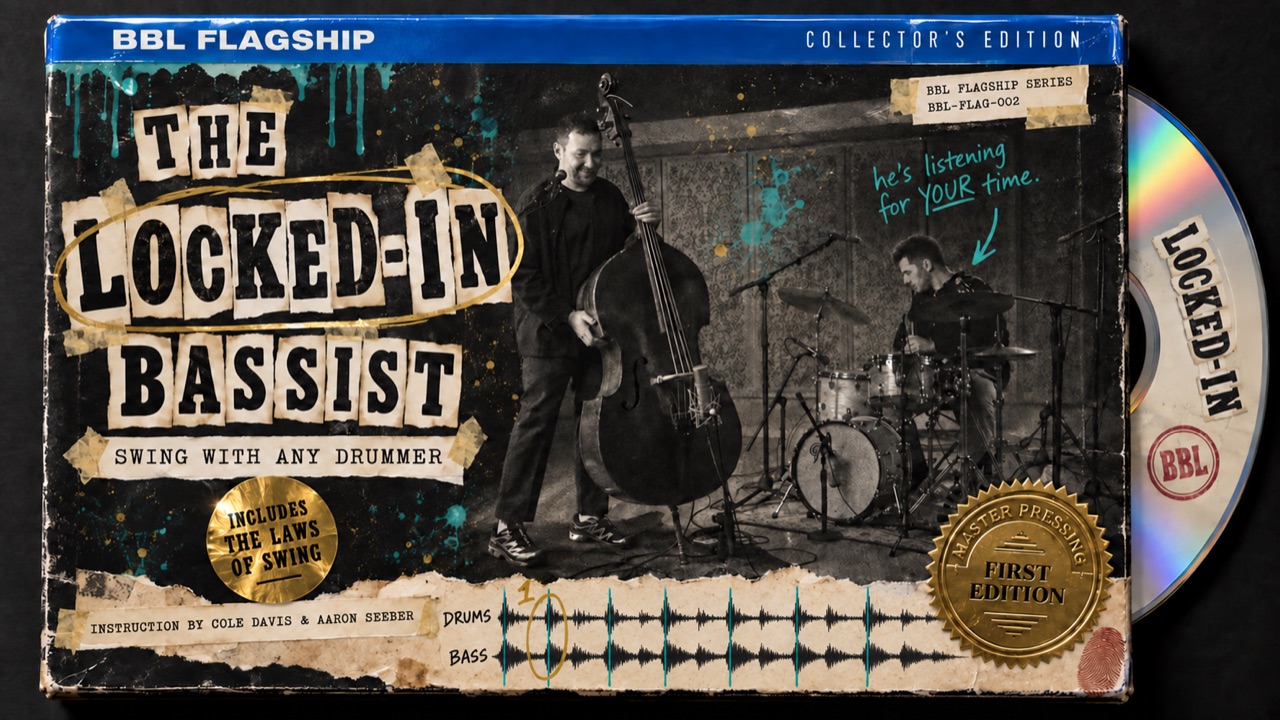
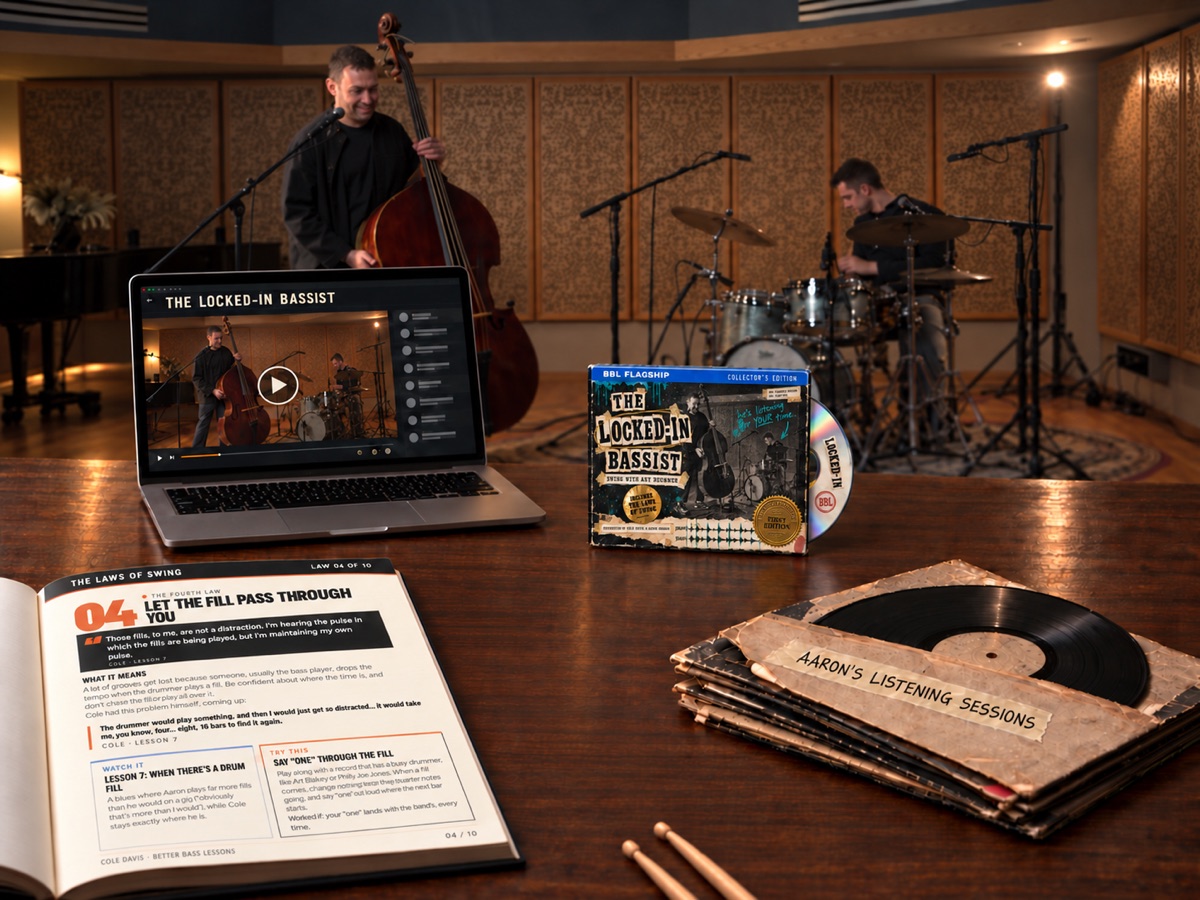
The Locked-In Bassist: Swing With Any Drummer, BBL Flagship collector's edition
$97 $67
Get The Locked-In Bassist · $67

Instant access · Laws of Swing PDF included · 14-day guarantee

Only if you join before the timer ends

00Days
00Hours
00Minutes
00Seconds

Grab it now and I'll also give you Aaron's Listening Sessions.

Ever notice you can feel it when a teacher points it out, but you can't hear it on the record? Aaron sits down with six records and shows you exactly what the drummer is doing, so you finally hear it for yourself. When the timer runs out, these come out of the course.

Session #1

Philly Joe & Miles

How Philly Joe Jones, Miles and Wynton Kelly talk to each other on Someday My Prince Will Come. (Once you hear the snare answer Miles, you'll never listen to that record the same way.)

Session #2

Kenny Clarke's Ride Cymbal

Clarke switching between triplets and sixteenths behind Dexter Gordon on Our Man in Paris... then playing way less on a different gig. (Knowing what not to play is half the job.)

Session #3

Connie Kay

A ride beat so straight it shouldn't swing, and yet it swings incredibly hard behind Coltrane on Bags & Trane. (Here's how.)

Session #4

Roy Brooks

A ride beat even straighter than Connie Kay's, with Blue Mitchell on Blue's Moods. (And why no two great drummers put that middle note in the same place.)

Session #5

Art Blakey's Orchestration

How Blakey uses the hi-hat, short notes, long notes and space to bring out a melody. (Plus the Opus de Funk moment drummers have borrowed ever since.)

Session #6

Papa Jo Jones

The brushes on Bebop Irishman, then all of Little Susie: a whole tune built from almost nothing, chorus by chorus, until it sounds like a party.

What you're getting:

  • The Locked-In Bassist: Swing With Any Drummer (every lesson + Records play-alongs)$97
  • The Laws of Swing PDFIncluded
  • Aaron's Listening Sessions (6)Launch only
Groovekeeper launch price $67

The Listening Sessions come out when the timer ends

Stop following the drummer. Start getting called back.

$97 $67
00Days
00Hours
00Minutes
00Seconds
Get It + Aaron's Listening Sessions

The guarantee

Take it to a gig in the next 14 days. If it doesn't work, I'll buy it back.

Before you watch Lesson 1, record yourself walking one chorus alone. No metronome, no track. Record another after Lesson 10. Then take it to your next jam or gig.

▶  1:05 · The test, taken live

Either you feel the difference on the bandstand,
or you don't pay a penny.

If it doesn't feel better, email [email protected] within 14 days of buying and I'll refund every penny.

Cole Davis

About me

Why I made this.

Today I've won the Ron Carter Bass Competition, been named an NEA Future Jazz Master, and I play bass for Lambchop. But I wasn't always the bass player drummers wanted to play with. For years, a drum fill could cost me the one, and I blamed whoever I was playing with.

What finally fixed it was taking responsibility for the time, instead of handing it to the drummer.

At every level, right up to the professional New York City level, you'll run into a drummer and a bass player who aren't locking in. This course is so that when it happens to you, you know exactly what to do.

Cole

FAQ

Questions before you buy.

Is this for upright or electric?

Both. It's about time, feel and the rhythm section, not fingerings. Nothing in the course is upright-only.

I don't have a drummer to practice with. Does it still work?

Yes. The Records play-alongs show you how to practice this with the records you already own: who to lock in with, and why following the soloist throws you off. The records become your rhythm section.

I already practice with a metronome. Why do I need this?

Keep practicing with it. The metronome builds your own time. This course is about why that time disappears the second a real drummer pushes, drags or plays a fill, and what to do in the next bar.

I own Bulletproof Time or Pocket Drills. Is this the same thing?

No. Those are drills you do alone. The Locked-In Bassist is what happens with a real drummer: the fills, the drags, the nights it won't lock in, from both chairs.

Are there refunds?

Yes, you have 14 days. Try it on your next gig. If it doesn't feel better, email [email protected] within 14 days of buying and I'll refund every penny.

How long does the launch price last?

Until the date on the timer. After that, The Locked-In Bassist goes to $97 and Aaron's Listening Sessions come out of the course.

What if I have questions while I'm working through it?

Reply to any email I send. I read them.

Every drummer you play with decides whether to call you back.
Make sure the answer is yes.

Groovekeeper launch: $97 $67
Ends …, then $97 and the Listening Sessions come out

The Offer

Here's everything you get.

The Locked-In Bassist course on a laptop, the collector's edition case, The Laws of Swing book and Aaron's Listening Sessions records
The Locked-In Bassist: Swing With Any Drummer · Laws of Swing PDF · Aaron's Listening Sessions
$97 $67
Get The Locked-In Bassist · $67 →
  • VISA
  • Mastercard
  • AMEX
  • Apple Pay
  • PayPal

Instant access · Laws of Swing PDF included · 14-day guarantee

P.S. In case you skipped to the bottom: The Locked-In Bassist shows you exactly what to do when a real drummer pushes, drags or throws a fill at you, from both the bass chair and the drum chair. It's $67 until the timer runs out, then $97. Join before then and you also get Aaron's Listening Sessions. And you have 14 days to try it on a gig without risking a penny.

P.P.S. Aaron turns down gigs with bass players whose time isn't good. After this course, you won't be one of them.