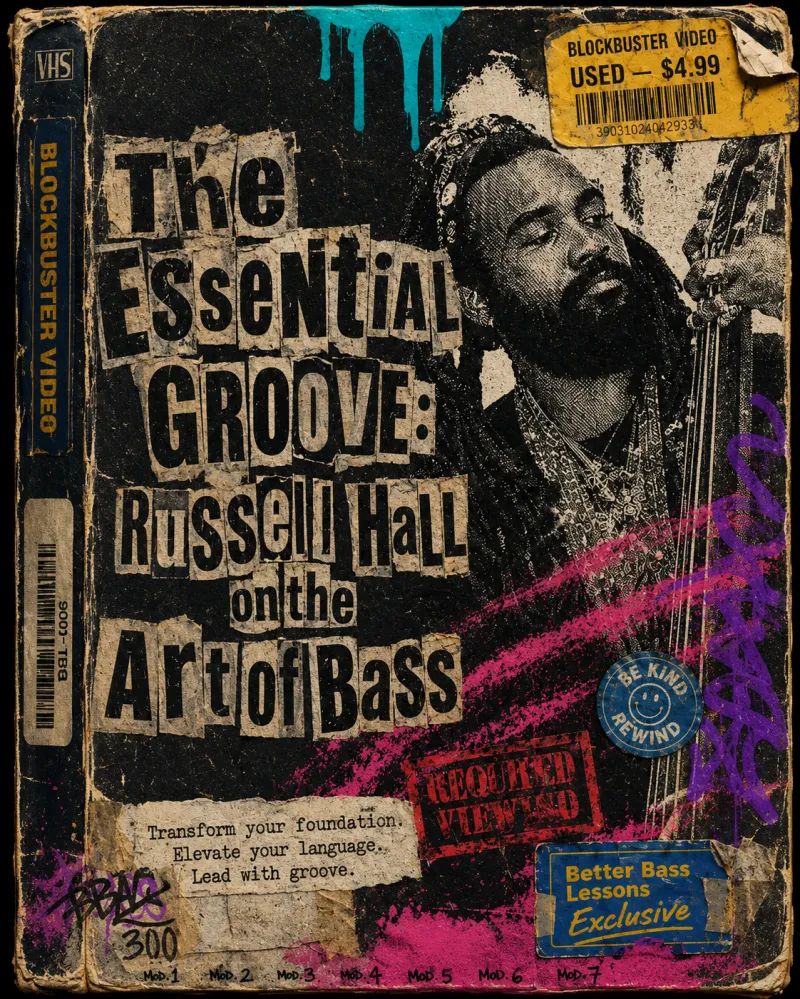
Better Bass Lessons · A Russell Hall Course · Bonus: The Groove Clinic Replay
Better Bass Lessons Presents · A Course from Russell Hall
The Essential Groove
Russell Hall on the art of bass.
A deep solo session with a working New York bassist on sound, setup, the masters, technique, and the common song. Plus the full Groove Clinic live workshop replay with hot-seat student critiques, included as a bonus.
$77 · one-time · lifetime access · 30-day money-back
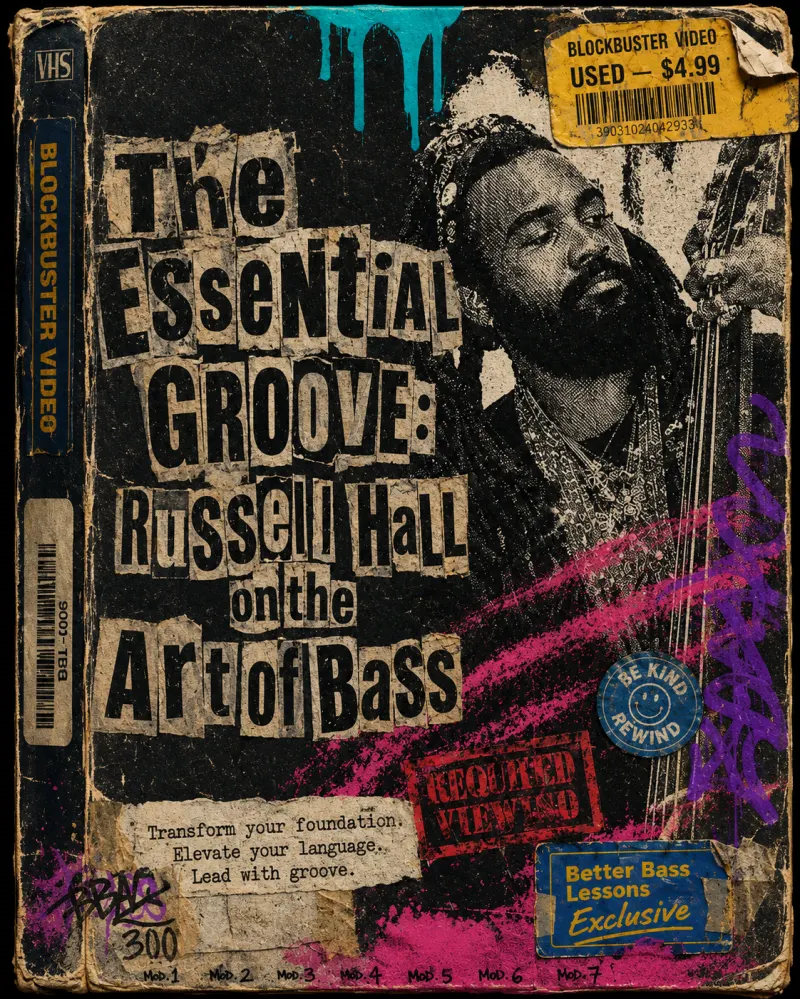
The pitch
A working New York bassist on sound, setup, the masters, and the common song, at the level he teaches his peers.
A solo course. Plus the live clinic.
The main course is Russell Hall (alone, with a bass) teaching the way he'd teach a peer. Not a beginner ramp. Not a structured module-by-module method. The full thinking of a working New York bassist on what bass playing actually is and how to do it at the level he holds himself to.
He covers sound and setup choices (the Charlie Haden half-and-half philosophy, gut vs. steel), the Y2K jazz bass lineage (Larry Grenadier, Joe Martin, Matt Brewer, Joe Sanders, Rick Rosato), how to play inside the idiom versus outside it, the Barry Harris cell-to-flower exercise, the right-hand technique spectrum, playing fast, the common song of the blues, and why every bass player needs to know Geezer Butler and Jeff Ament both.
The bonus is the full Groove Clinic Replay, a two-hour live workshop with Cole Davis hosting and three student hot-seat critiques. Russell demonstrates how he'd approach each student's tune, in real time. It's the practical sister to the solo course.
You own both forever. Different parts will land differently every time you come back to them.
Eight ideas Russell builds the course around.
These aren't chapter markers (Russell teaches in long, connected arcs), but here's what he returns to throughout the main session.
-
01
Sound and setup.
What changes when you put gut on the bottom and synthetic on the top. The Charlie Haden half-and-half setup vs. the all-gut traditional approach Russell normally plays. How "you get into the spirit of the person you're borrowing the instrument from," and what your own setup signals about who you are as a player.
-
02
The Y2K jazz bass lineage.
Larry Grenadier. Joe Martin. Matt Brewer's wide growly vibrato. Joe Sanders's upper-register clarity. Rick Rosato. The late Zach Ostroff. The post-electric upright technique that built modern jazz bass: tempered, intentional, almost guitar-like at the right hand.
-
03
In the idiom. Out of the idiom. The third thing.
Bebop as the music of humor. Lester Young, Monk, Eric Dolphy. The difference between "playing out within the idiom" and "taking the idiom outside the idiom," and why most players never figure out which one they're actually doing.
-
04
Levity and abandon.
Russell's rings discipline: half a pound on each finger so the hands learn to play light. Barry Harris's "bebop like it's falling down the stairs." Why most bass players over-articulate, and what playing with real levity actually sounds like on a tune like Cherokee at 300.
-
05
The right-hand spectrum.
Peter Washington's "soft palate" finger, like the pad is made of gum. Ron Carter the doctor, barely touching the bass. Matt Brewer's bombast. Joe Sanders's upper-register clarity. Russell maps the technique spectrum and shows you where on it you actually want to live.
-
06
From the cell to the flower.
The Barry Harris exercise Russell carried out of those Tuesday classes. Take a four-note cell. Edit the back-end of the phrase. Edit it again. Build it, build it, build it, until the seed becomes a chorus of vocabulary. The actual process behind how language gets built.
-
07
Each master is a portrait.
Mingus the film composer: the minor-six walk-down as melodrama in motion. Israel Crosby the cream puff. Wynton Marsalis as the trumpet cream puff. PC's soliloquy. George Duvivier. Christian McBride built like a lineman, playing like a rock-and-roller. Each master treated as a whole portrait, not a lick library.
-
08
The common song.
"The blues is the common song of God." Why bass players have to know Geezer Butler and Jeff Ament both, and why the Rolling Stones, Nirvana, Alice in Chains, flamenco, Brazilian music, and country are all source material for the bass you want to play. Music has no defaults. Nothing is off-limits.
Every bass player has their thing they default to. That was the thing I wanted to separate myself from. I don't want any defaults. I want everything to sound great, regardless of if I'm not feeling great.
The course. The clinic. One lifetime.
The Solo Course
Russell alone with a bass, teaching the way he'd teach a peer. Sound and setup, the Y2K jazz bass lineage, in/out of the idiom, levity, the right-hand spectrum, the Barry Harris cell-to-flower, the masters as portraits, and the common song. Watch as many times as you want.
Groove Clinic Replay BONUS
The full two-hour live workshop. Three students play live (All Blues, All of Me, up-tempo blues), Russell critiques and demonstrates over each. Cole Davis hosts. Extended Q&A on internal time, listening, technique, and the masters.
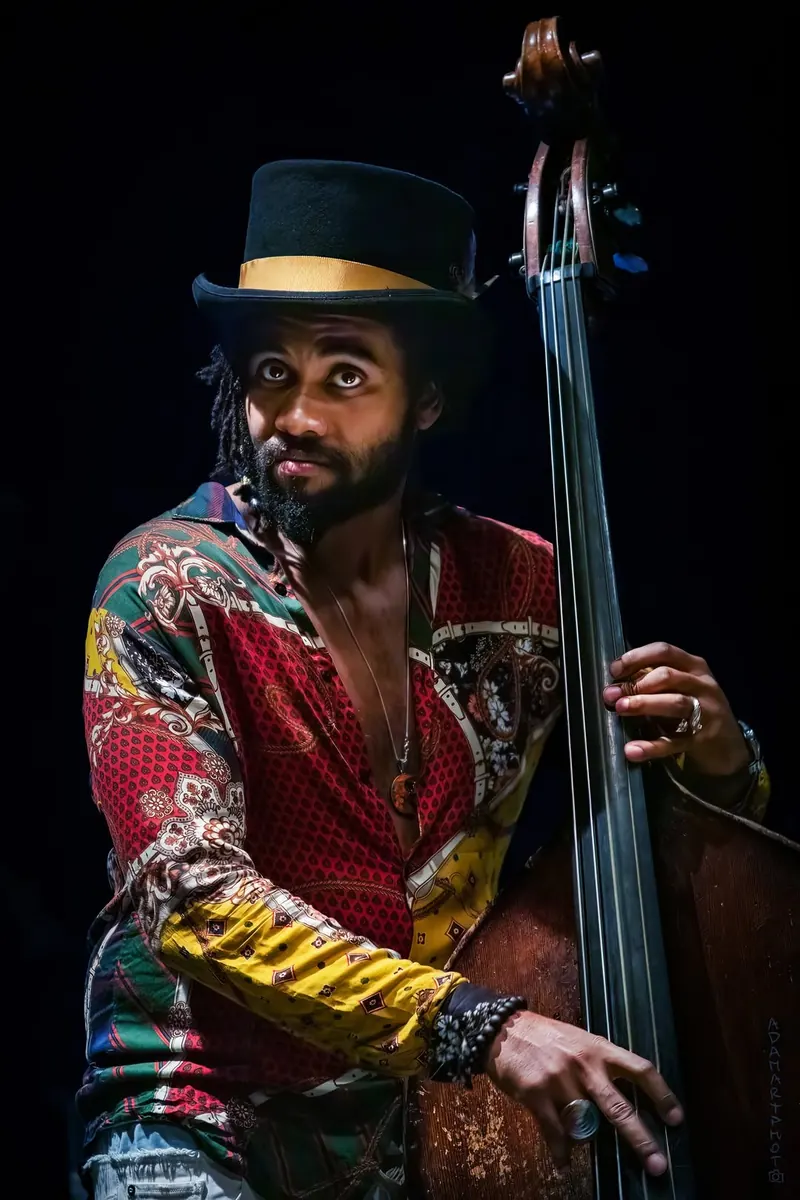
Russell Hall
Wynton Marsalis · Roy Hargrove · Nicholas Payton · Barry Harris
Russell Hall is a New York City jazz bassist. He has performed with Wynton Marsalis (whom he calls his greatest mentor), Roy Hargrove, and Nicholas Payton, and recorded with the late Barry Harris. His cross-genre work includes touring with the Steve Miller Band, but the heart of his playing sits squarely in the lineage of Paul Chambers, Israel Crosby, and Oscar Pettiford.
He plays gut strings on upright. He thinks about music the way working New York musicians actually think about it: historically, philosophically, and physically, all at once. This clinic is the closest you'll get to two hours in a practice room with him.
- Wynton Marsalis
- Roy Hargrove
- Nicholas Payton
- Recorded with Barry Harris
- Steve Miller Band
- NYC-based jazz bassist
One price. Own it forever.
$77one-time · lifetime access
- ✓The Solo Course: Russell's full teaching sessionCore
- ✓Groove Clinic Replay: 2-hour live workshopBonus
- ✓3 student hot-seat critiques (in the clinic)Included
- ✓Russell's live demonstrations throughoutIncluded
- ✓Lifetime access & free updatesForever
30-day money-back guarantee.
Watch the full clinic. Sit with it. Come back to the parts that landed. If it doesn't deepen your relationship to the bass and the music, email support within 30 days and we'll refund every dollar. No questions.
Things people ask before they buy.
Two pieces. The main course is Russell's solo teaching session: him alone with a bass, working through eight connected arcs (sound and setup, the Y2K jazz bass lineage, in/out of the idiom, levity, right-hand spectrum, cell-to-flower, the masters as portraits, the common song). The bonus is the Groove Clinic Replay, a two-hour live workshop with Cole Davis hosting and three student hot-seat critiques.
Both. Russell plays upright (gut strings), but the principles (sound, internal time, intent, active listening, cross-cultural study, note duration) apply to either instrument. He explicitly contrasts upright and electric technique during the clinic.
Intermediate and up. You should already be able to walk a bass line and read a basic chord chart. This is not a beginner method. It's a master class on the philosophy and technique behind the playing.
Russell Hall is a New York City jazz bassist who has performed with Wynton Marsalis (his greatest mentor), Roy Hargrove, Nicholas Payton, and recorded with Barry Harris. Cross-genre credits include the Steve Miller Band. He plays gut strings on upright, in the lineage of Paul Chambers and Israel Crosby.
The main solo course is a deep teaching session you'll return to many times. The bonus Groove Clinic Replay is just over two hours and includes three student hot-seat critiques. Combined, you're getting a serious body of material to live with.
Yes, 30-day money-back guarantee. Watch the full clinic. If it doesn't deepen your relationship to the instrument and the music, email support within 30 days for a full refund.
The main course isn't a structured multi-module method. It's Russell teaching at the level he teaches his peers: long arcs, connected thinking, demonstrations on the bass throughout. The bonus clinic is a live, unedited workshop with real student critiques. Together, you get both the philosophy and the practical: the unfiltered way Russell actually thinks about the instrument.
The course. The clinic. One lifetime.
Stop chasing chops. Start chasing the thing chops point to.
Russell Hall's solo course on what the chops are actually for, plus the bonus Groove Clinic Replay with three student hot-seat critiques.
Get instant access: $77One-time payment · Lifetime access · 30-day money-back