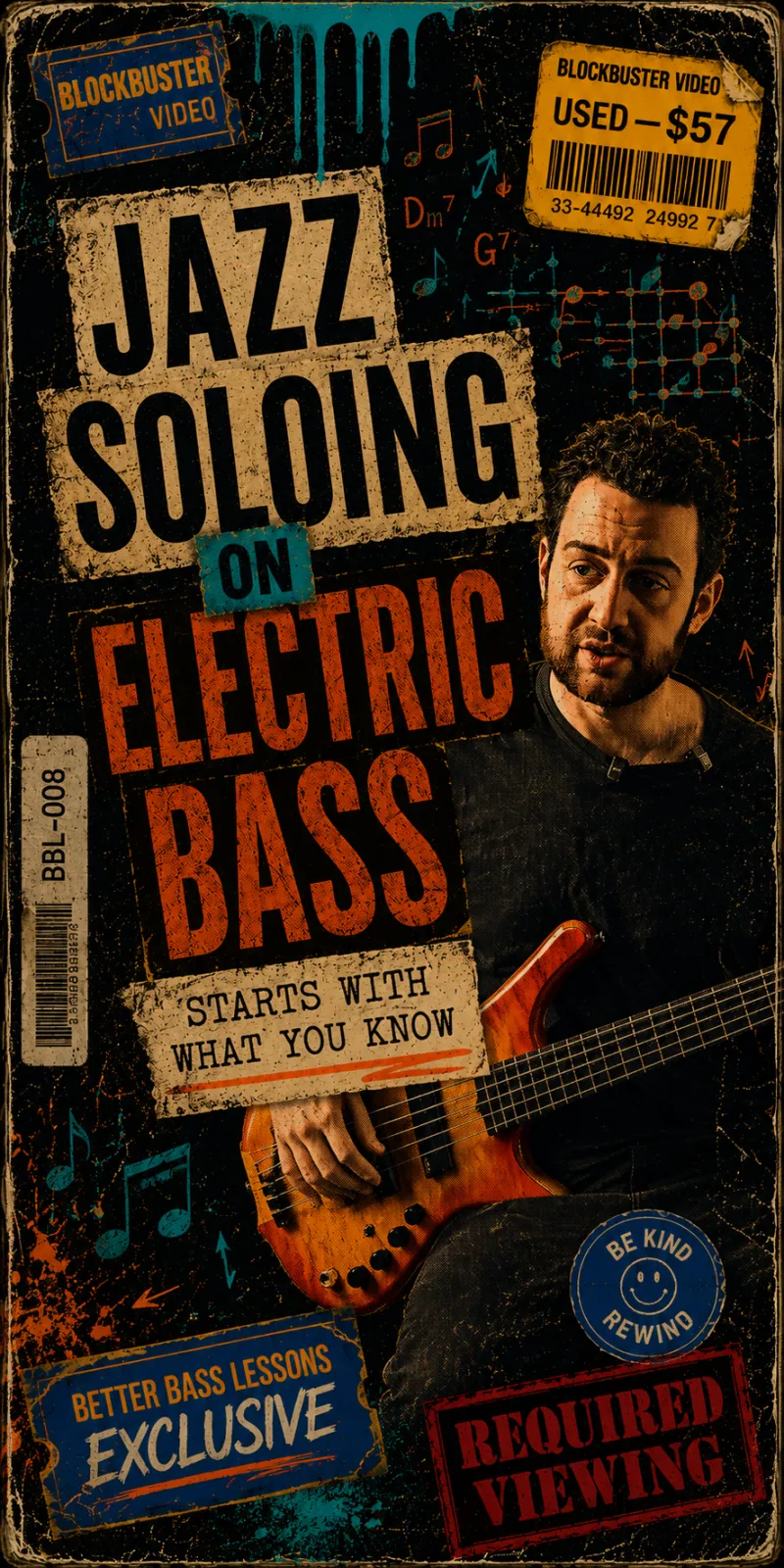
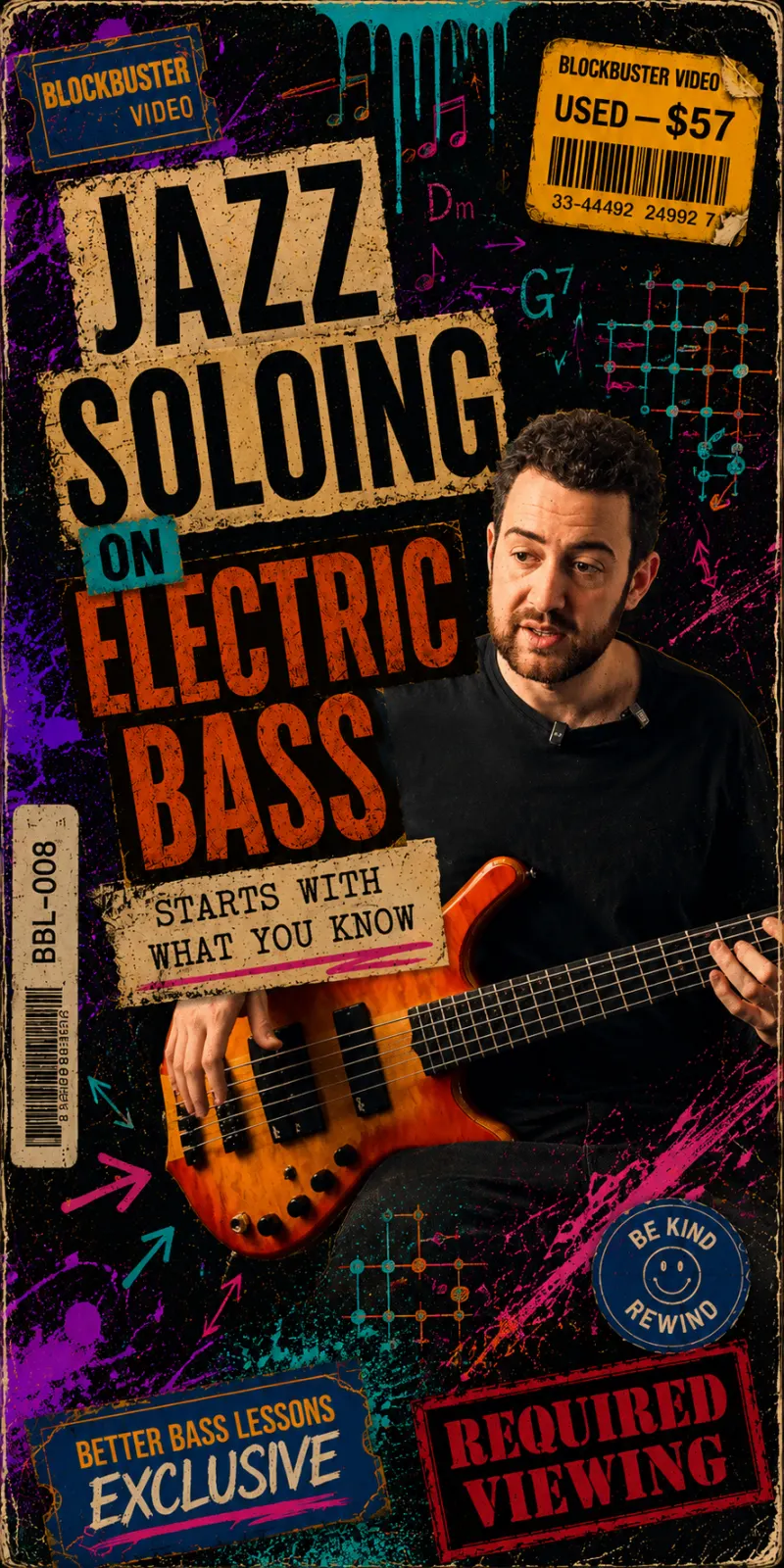
Jazz Soloing on Electric Bass: from the Beginning (Pt. 1)
A 5-lesson method that takes you from "I can walk a line but I freeze when it's my turn to solo" to soloing through blues, rhythm changes, and ii-V-I's, without scales, without modes, without bebop licks you can't actually use.
$67 · one-time · lifetime access
See how it's taught before you decide.
First 2 minutes of Lesson 5: Swing Your Lines. The capstone move of the chiseling method: making your eighth notes swing so the line lands like jazz instead of a fast walking part. Every lesson comes with a Put-It-To-Practice video and a tab + notation PDF.
This is for you if…
- You can walk a line through a blues but freeze the second the bandleader points at you for a solo
- You've tried learning scales and modes and your solos still sound like fast bass lines
- You've transcribed bebop solos and can't figure out how to use any of it
- You're a bassist who plays gigs and wants to actually solo on them
- You've been "advanced beginner" at jazz for years and don't know how to break out
- You can read a chord chart and play through changes. You just can't solo over them yet
Maybe not if…
- You can't walk a bass line yet. Start with Walking Basslines from the Beginning first
- You want shred-bass technique or slap soloing
- You want a fakebook of pre-written licks to memorize
Soloing isn't a scales problem. That's why scales aren't fixing it.
Most bass players can walk a decent line. The drummer counts off, you find the changes, you play quarter notes through a blues, and it sounds like music. Then the leader points at you for a solo. And something stops working.
You play a few notes, run out of ideas, fall back into a walking line, run out of ideas again, and pray the chorus ends. You walk off the stand thinking you need to learn more scales. More modes. More bebop vocabulary. So you go home, transcribe a Charlie Parker solo, get two bars in, and quit. It's not a scales problem.
The problem is that bass players spend their whole playing lives on quarter notes. Every gig, every rehearsal, every practice session: quarter notes. The drummer relies on it. The band relies on it. If you lay out for two bars on a gig, the whole stand panics.
Then you take a solo, and suddenly you're supposed to leave space, play eighth notes, start phrases on beats that aren't beat one, and not freak out about any of it. Nobody taught you how to do that. They just handed you a Real Book and said "play." There's a way to bridge it. It's not flashy and it's not complicated. But it works, and it works fast.
Start with what you already know how to do.
The bass line is the marble. The solo is the sculpture. We start with the marble.
Most jazz courses hand you a blank canvas and tell you to fill it with scales. That's why you're stuck. The blank canvas is the problem. This course doesn't start with a blank canvas. It starts with something you can already do, and walks you through five sequenced moves that turn it into a solo. No scales to memorize. No modes. No bebop transcriptions you'll quit on by bar three.
The method works because it meets your hands where they already are and rebuilds the soloing skill from the ground your bass-playing already covers. Five lessons. Each one is a single move. Each move is small enough to drill in 15 minutes and specific enough to actually change how you sound the next time you play.
By Lesson 3, you'll already sound different over a blues. By Lesson 5, you'll be soloing through ii-V-I's, rhythm changes, and standards, and it'll sound like a solo. Not a fast walking line. Not a memorized lick. Not a panic attack with notes attached.
This is the same method I teach my private students one-on-one. It's the same method I used to learn how to solo. It's the only thing I've found that actually fixes the freeze.
By the end, you'll be able to…
- ✓Take a solo on a blues without panickingThe first thing the method fixes.
- ✓Solo through a ii-V-I in any keyThe 5 keys covered in the backing tracks: B♭, C, E♭, F, G.
- ✓Leave space without losing the formThe skill that separates soloists from bass players soloing.
- ✓Use chromatic approach notes musicallyNot random. Targeted, purposeful.
- ✓Start a phrase on any beat, not just beat oneThe thing that makes lines sound like jazz instead of exercises.
- ✓Solo through rhythm changesB♭ rhythm changes, three tempos, included.
- ✓Find the chord tones on every fretFretboard mapping that doesn't crumble under pressure.
- ✓Build a solo from a bass lineThe chiseling method. Use it forever.
- ✓Hear thirds and sevenths the way horn players hear themThe harmonic shift that changes everything.
- ✓Stop relying on muscle memorySoloing demands focus. The course teaches you how to stay in it.
- ✓Play eighth notes that actually swingNot too straight. Not too triplet. Right in the pocket.
- ✓Sound like yourself, not a transcriptionFive moves you own, not licks you borrowed.
The full curriculum.
5 lessons · 5 Put-It-To-Practice companion videos · the chiseling method
- 01Subtracting From a Bass Line: the first move of the whole system
- 02Thirds and Sevenths: the guide tones that outline any chord
- 03Eighth Note: the rhythm shift that turns a bass line into a solo
- 04Subtracting from Eighth Notes: apply the chiseling method to your new rhythm
- 05Swing Your Lines: the capstone move that makes eighth notes land like jazzPreview
Total: 5 lessons · 5 Put-It-To-Practice videos · PDFs + backing tracks for every lesson
Everything you need to actually do the work.
- 5 HD video lessonsSubtracting From a Bass Line · Thirds and Sevenths · Eighth Note · Subtracting from Eighth Notes · Swing Your Lines
- 5 Put-It-To-Practice videosOne per lesson: Cole demos the drill at gig tempo so you can hear the target
- The 15-Minute Gig Saver Protocol (PDF)The exact 15-minute warm-up to run before any jazz gig, printable, gig-bag-ready
- The 3 and 7 Cheat Sheet (PDF)Every chord type's guide tones at a glance, the reference you'll keep on the stand
- 21+ backing tracks, 5 keysB♭ blues, ii-V-I major in B♭/C/E♭/F/G, and B♭ rhythm changes. Slow, medium, and fast tempos of each
- Lifetime accessNo subscription, no auto-renewal
- Free updates foreverEvery revision and addition, included
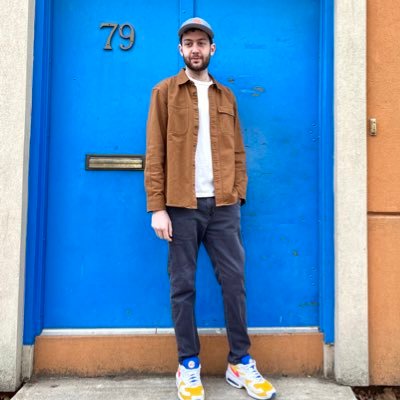
Cole Davis
First-call jazz bass player · Juilliard Artist Diploma
I've played thousands of gigs. Most of them with sheet music I'd never seen until the downbeat. A lot of them with leaders who pointed at me at the worst possible moment for a solo I wasn't ready for.
I went to Juilliard expecting to learn scales and modes. They didn't teach scales and modes. They taught how to feel the form, how to play the song, and how to make a solo without leaning on theory you don't actually need. The notes are all there: one, three, five, seven, nine. That's most of it. The rest is rhythm and space.
I've been teaching bass players how to solo for over a decade. The method in this course is what works. Not what sounds impressive on paper. What works on a stand, on a gig, with a drummer counting off a tune you didn't know was on the set list. If you can walk a line, I can teach you to solo. This course is how I do it.
- Juilliard Artist Diploma
- First-call jazz bass player
- 10+ years teaching jazz bass
- Hundreds of private students
One price. Own it forever.
$67one-time
- ✓5 HD video lessons$129
- ✓5 Put-It-To-Practice videos$49
- ✓The 15-Minute Gig Saver Protocol (PDF)$19
- ✓The 3 and 7 Cheat Sheet (PDF)$19
- ✓21+ backing tracks (B♭ blues, ii-V-I × 5 keys, rhythm changes)$49
- ✓Lifetime access + free updates$49
7-day money-back guarantee.
Try the whole course for 7 days. Watch every lesson, run every drill, work the materials. If it doesn't move your playing forward, email support and we'll refund every dollar. No questions, no follow-up sales pitch, no "are you sure?" survey. We only want you in if it's working.
Things people ask before they buy.
Helpful but not required. Every lesson includes both tab and standard notation PDFs, and Cole demonstrates every concept on the fretboard.
Beginner-to-intermediate jazz bassist. You should already be able to walk a bass line through a blues or a basic ii-V-I. If you can't walk a line yet, start with a walking-basslines course first. This one assumes that ground.
Each of the 5 lessons is built to be drilled in 15 minutes a day. Most students notice the change in their soloing by Lesson 3 (about a week in). The full method is roughly 3 to 6 weeks of focused practice.
An electric bass and a way to hear yourself (amp or headphones). A metronome and a recording device are strongly recommended. The included backing tracks cover the practice contexts (blues, rhythm changes, ii-V-I in 5 keys × 3 tempos).
Electric. Cole demonstrates everything on electric bass. The harmonic ideas transfer to upright, but the fretboard examples are specifically for the electric instrument.
Every lesson includes a Put-It-To-Practice companion video that walks through the drill at performance tempo. If something still doesn't click, email support. Cole reviews student questions weekly.
YouTube gives you topics. This gives you a sequence. Five lessons in the order that actually moves a walking bass player into a soloing bass player, with materials, backing tracks, and Put-It-To-Practice videos attached.
Forever. One purchase, lifetime access, all future updates included. No subscription.
Email support within 7 days of purchase for a full refund. The guarantee section above has the policy.
Yes, see the Better Bass Lessons store for course bundles.
At $67 one-time the course is priced as a single payment, but you can use any standard payment method at checkout.
Still have questions? Email [email protected]
I remember the gig where this clicked for me. The leader called a tune I'd never played, counted it off, and four bars in, pointed at me for a solo. I froze. Played a fast walking line for sixteen bars and prayed it was over.
I went home that night and stopped trying to learn more scales. I started doing the opposite. I sat down with the bass line I would have played on that tune, the same quarter notes I'd been playing my whole career, and asked: what if I just took notes out? What if I left space? What if I played the same notes in a different rhythm?
That night I sounded more like a soloist than I had in five years of scales practice.
The five moves in this course are the system I built from that night. They're what I teach private students. They're what I wish someone had handed me on the first jazz gig I ever played. If you can walk a line, you have everything you need to solo. You just don't have the moves yet.
Spend a week with the first lesson. If it doesn't change how your next solo feels, email support and we'll refund every dollar. But it will.
Cole Davis
Jazz Soloing from the Beginning. $67. Yours forever.
$67
Get instant access7-day money-back guarantee. Email support within 7 days for a full refund.