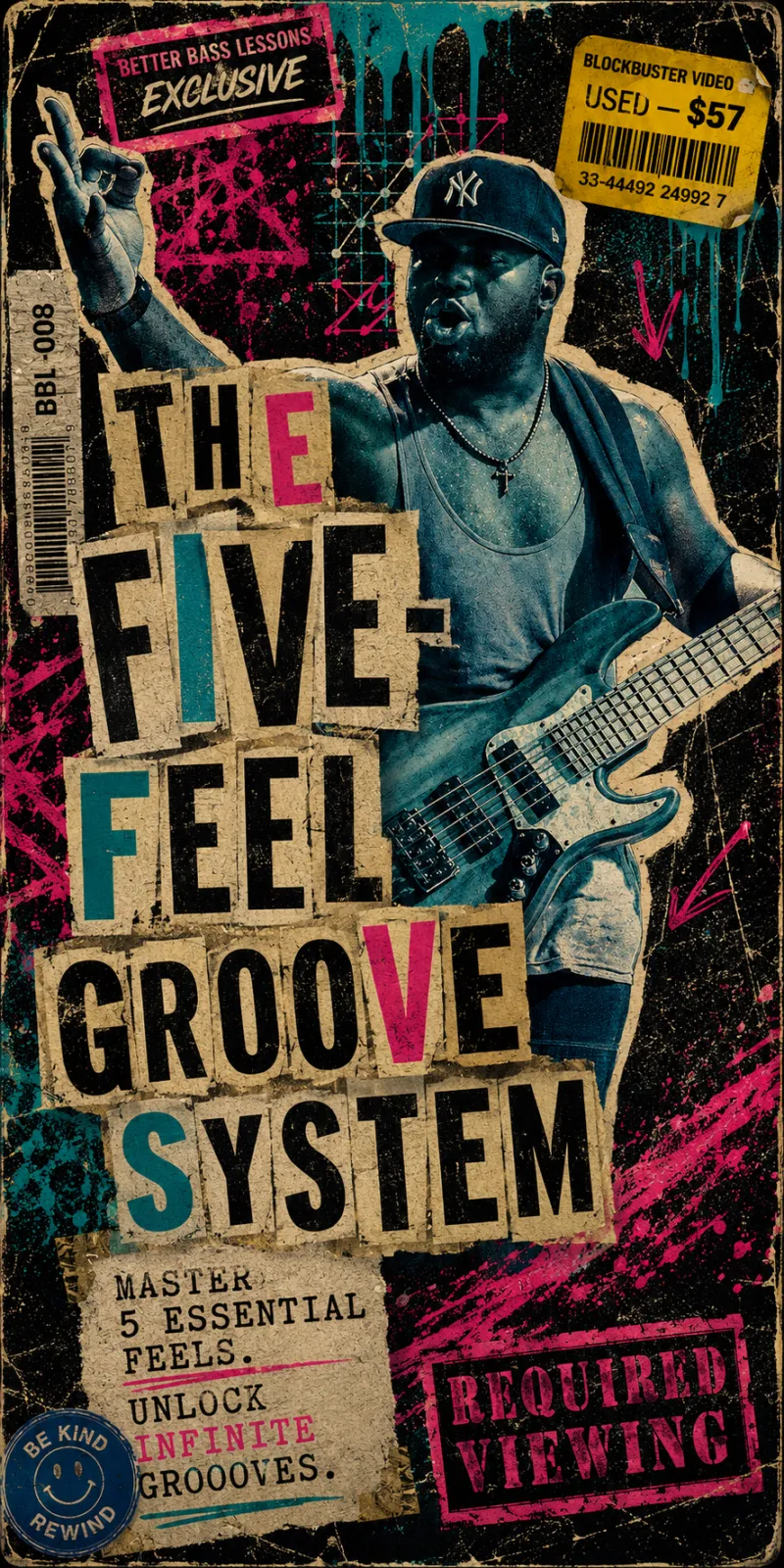
You've been working on your notes. This is everything that happens around them.
The step-by-step system a Taylor Swift / Broadway bassist uses to walk into any genre (pop on Monday, theater on Tuesday, R&B on Wednesday) and lock the room in every single time.
$57 · one-time · lifetime access · 60-day money-back
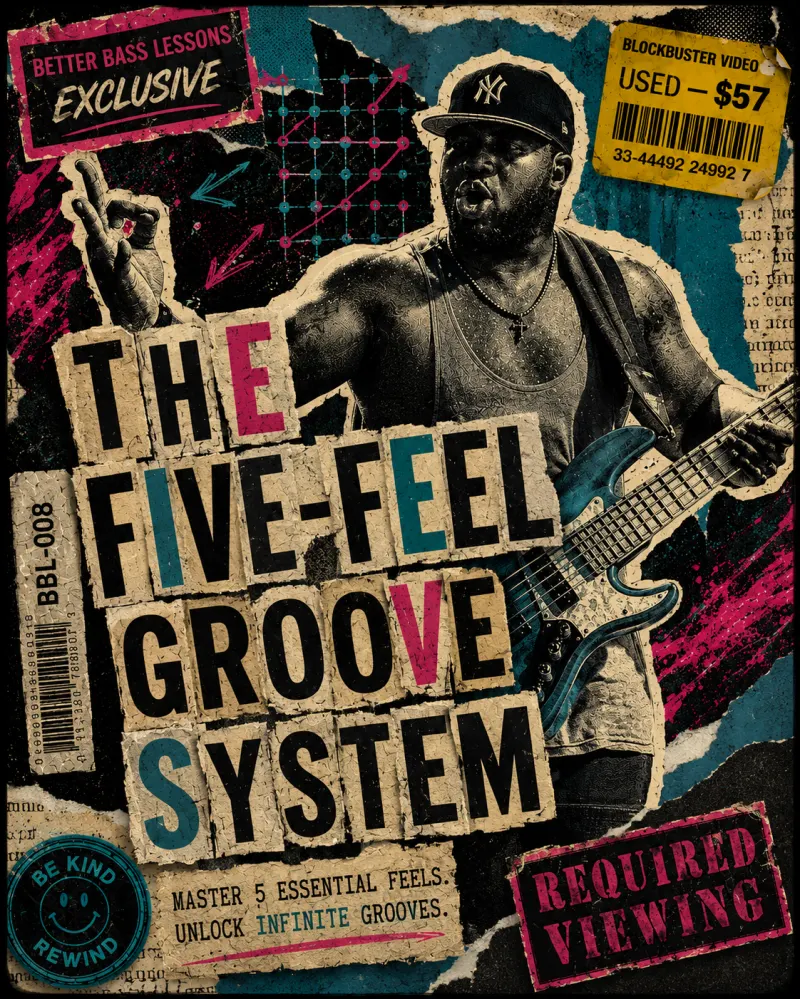
What if…
…the next time you sat in with a band, the drummer turned around and nodded at you? Not out of politeness. Not because you played the right changes. But because you locked in with him so tight that the whole room felt it.
…you could hear a song you've never played before (any genre, any tempo) and know exactly where to sit on the beat before you play your first note?
…the thing separating you from the bass player who gets called back for the next gig had nothing to do with how many scales you know, how fast you can play, or how many licks you've memorized?
…it was something you've never practiced, because nobody ever taught you it existed?
You already know the notes. That's not the problem.
You can play the changes. You know your arpeggios. You can walk through a blues, comp through a jazz standard, hold down a root-fifth pattern on a pop tune.
And still, something doesn't feel right.
You sit in at a jam. You play the right notes. Everybody nods politely. But nobody moves. The band doesn't lean into what you're playing. The drummer doesn't lock in with you. You go home and listen to the recording and you can't figure out what's wrong, because technically, nothing is wrong.
The notes are right. The rhythm is right. The changes are right.
But it doesn't feel like anything.
There's an entire dimension of bass playing that has nothing to do with what notes you choose. It has everything to do with where you place them. And unless someone shows it to you, you don't even know it's there.
That's what this course is about.
See Papa Bear teach it before you decide.
First 2 minutes of Part 6: Adding to the Pocket. How to expand a bass line on the second time through a song: simple first chorus, then adding more, then giving the music life, without breaking what makes the pocket work.
A note from Cole on why this course exists.
I've been teaching bass players for years. Scales. Arpeggios. Walking lines. Chord tones. Soloing. All the stuff you need to play the right notes at the right time.
But there was always a gap I couldn't fill. I'd get emails from students saying, "Cole, I know the notes. I can play the changes. But something still doesn't feel right and I can't figure out what it is."
I knew exactly what they were talking about. Because the thing they were missing isn't about notes at all. It's about where you place the notes. It's about feel. And that's a completely different skill than anything I teach in my other courses.
So I went and found the best person on earth to teach it.
I watched Papa Bear play one note, literally one note, over a drum loop and make it sound like five different bass players. Same note. Same tempo. Same track. Five completely different feelings.
And I said, "That. I need you to teach my students exactly that."
This course is what he built.
The Five Feels
Papa Bear breaks groove down into five variables. Five feelings you can create with the exact same notes, the exact same tempo, over the exact same song.
On the beat. Right on the pulse. One, two, three, four. This is where most bass players live by default, and it's only one of five options.
Behind the beat. Late. Lazy. Sluggish on purpose. This is where R&B lives. Where deep pocket lives. The whole room gets heavier. More relaxed. Like the music is exhaling.
Ahead of the beat. Pushing. Driving. This is where rock lives. Where the energy comes from. Everything feels like it's moving forward.
Straight. Evenly divided subdivisions. The foundation of pop, funk, and most modern music.
Swung. Uneven subdivisions. That bounce. Papa Bear says it best: "I think the more universal thing is that it's a feeling. You know the swung subdivision when you hear it."
Five variables. That's it. Every groove you've ever loved, every bass line that made you stop and rewind, is some combination of these five things.
And here's the part that matters: you can learn to move between them on command.
Even if you've been playing for 20 years and never thought about this once. Even if you've always just played "on the beat" and assumed that was the only option. Even if you think groove is something you're born with. Papa Bear proves otherwise, and he does it in a way that'll make you wonder why nobody taught you this sooner.
There's a moment in this course where Papa Bear puts on a drum loop, plays one note, then shifts behind the beat (same note, same tempo) and it sounds like a completely different bass player walked into the room. Then he pushes ahead. Same note. Now it's driving forward like someone hit the gas.
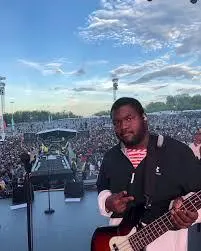
Paul "Papa Bear" Johnson
Taylor Swift · Doja Cat · Lizzo · Leon Bridges · Broadway
Paul "Papa Bear" Johnson is a bassist, session musician, and music director based in New York City. He currently performs with Taylor Swift, Doja Cat, Lizzo, and Leon Bridges, and plays eight shows a week on Broadway in Aladdin and Hadestown.
His career spans pop, R&B, jazz, funk, gospel, and theater, often in the same week. He's the guy artists call when they need someone who can walk into a room, hear a song for the first time, and lock into the pocket immediately. Not because of flashy technique. Because of feel.
Paul's approach to groove is built on fundamentals most players skip: where you sit on the beat, how long you let a note ring, how you build a bass line one note at a time instead of reaching for licks. He's spent years refining these concepts on stages and in studios with some of the biggest names in music, and now he's teaching them at Better Bass Lessons.
- Touring bassist: Taylor Swift
- Touring bassist: Doja Cat
- Touring bassist: Lizzo
- Touring bassist: Leon Bridges
- Broadway: Aladdin
- Broadway: Hadestown
- Session musician & music director
- Based in New York City
And it doesn't matter where you're starting from.
Doesn't matter if you play electric or upright. The five feels aren't instrument-specific. They're about where you place the note, not what you play it on.
Doesn't matter if you play jazz, funk, pop, R&B, rock, gospel, or Broadway. Every single one of those genres is built on where the bass sits relative to the beat. This is the system underneath all of them.
Doesn't matter if you've been playing for two years or twenty. Papa Bear says it directly: "You can do this at any level. You don't have to even know what a bass is really to do any of this stuff."
Doesn't matter if you think your groove is already good. Papa Bear, the guy who tours with Taylor Swift, says this: "This is literally what I practice all the time. And this is literally what I see even masters struggle with." If he still works on it every day, there's room for you too.
And doesn't matter if you've tried other courses on groove or rhythm and they didn't click. This isn't a theory lesson. Papa Bear doesn't draw diagrams or talk about triplet ratios. He plays one note and makes it feel five different ways. Then he has you do the same thing. It's ears-first, not head-first.
After you watch this course, you'll…
- ✓Hear songs differentlyPut on a track you've heard a thousand times and notice: "Oh. The bass is sitting behind the beat. That's why it grooves." You can't unhear it.
- ✓Know what to do in genres you've never playedFunk tune? Sit behind the beat with a shorter note duration. Rock tune? Push ahead. Pop ballad? Right on the pulse, straight eighths.
- ✓Stop defaulting to the same feel for every songRight now you probably play "on the beat" for everything regardless of genre. After this, you'll have five options, and the ear to pick which one the song is asking for.
- ✓Understand why your lines sound "off" in certain stylesEven when the notes are correct. It's not the notes. It was never the notes. It's placement.
- ✓Sound like a more experienced player, immediatelyNot because you learned new licks. Because you learned to control something most players never even think about.
- ✓Control note duration like a session playerThe difference between a note that sustains and a note that stops short. The thing nobody talks about. The thing that changes everything.
- ✓Move a phrase by an eighth or a half note and create a whole new pocketRhythmic displacement. Same notes. Different feel.
- ✓Add ghost notes on purpose, not by accidentMost players add them without realizing. Papa Bear shows you how to control the volume, attack, and timing.
- ✓Build a bass line for a full song, not just a loopSimple first time through. Expanding the second. Giving the music life. The session-bass approach.
- ✓Land your fills instead of cramming themPapa Bear's rule: think in four-bar phrases. Simple for three. Fill in the fourth. Start over.
- ✓Switch between five techniques over the same grooveFinger style. Palm mute. Slap. Pick. Grease. Same line, five different sounds.
- ✓Walk into any genre and place yourself like you belong thereThe thing Papa Bear does every night across pop, theater, and R&B. Now it's a system you own.
The full curriculum.
16 video lessons · taught entirely by Papa Bear · no filler, no fluff
- 00Intro: the dimension of bass playing nobody taught you
- 01Beat Geometry: Right On It, the default most players never leave
- 02Beat Geometry: 3 Sides of the Beat, the framework that changes everything
- 03Beat Geometry: Behind the Beat, the one-note drill that exposes your time feel
- 04Straight vs. Swing: placing yourself anywhere on the spectrum by ear
- 05Building Your Pocket: the session-bassist approach to a new song
- 06Adding to the Pocket: how to give the music life on the second chorus
- 07Playing Fills: the four-bar phrasing rule that keeps fills from landing flat
- 08Make Any Note Groove: note duration, the secret to groove nobody talks about
- 09Motivic Development in Bass Lines: rhythmic displacement, same notes, new pocket
- 10Right-Hand Techniques: finger style, palm mute, slap, pick, grease
- 11Ghost Notes and Using the Thumb: control the attack, not just the timing
- 12Licks: when to play one, when to leave it out, and how to pace them
- 13Playing to Tracks: how to lock in with a record you've heard once
- 14On the Session: live, real-time bass-line building over a pop track Papa Bear has never played
- 15BTS: Gear, what Papa Bear plays and why
Total: 16 video lessons · taught entirely by Papa Bear · live demonstrations throughout
"I'm not going to give you a bunch of licks you can play. You can find a lick for free on YouTube. What I want to give you is a concept you can hold for the rest of your life."
Everything you need to actually do the work.
- 16 HD video lessonsTaught entirely by Papa Bear, from beat geometry through the live on-the-session demonstration
- The one-note drillThe exercise that exposes your time feel in 30 seconds, and the daily practice that fixes it
- Drum tracks & backing tracksReal-genre loops to drill placement against: pop, rock, R&B, funk, theater
- Live on-the-session demoPapa Bear builds a bass line in real time over a pop song he's never heard. No chart. Just the system.
- BTS gear breakdownPapa Bear's basses, signal chain, and tone choices for tour and Broadway
- Lifetime accessNo subscription, no auto-renewal
- Free updates foreverEvery revision and addition, included
This is not for you if…
- You're looking for licks. There are zero licks in this course. Papa Bear says it himself: "You can find a lick for free on YouTube."
- You're still learning your first bass line. Get the fundamentals first. This will be here when you're ready.
- You think groove is something you either have or you don't. Papa Bear proves otherwise, but you have to be willing to sit with a metronome and practice placing one note behind the beat for 20 minutes. If that sounds boring, this isn't for you.
- You want a shortcut. This is a system, not a trick. It works because you practice it.
One price. Own it forever.
$57one-time · lifetime access
- ✓16 HD video lessons taught by Papa BearCore
- ✓The one-note drill + daily practice routineIncluded
- ✓Drum & backing tracks across genresIncluded
- ✓Live on-the-session demonstrationIncluded
- ✓BTS gear & signal chain breakdownBonus
- ✓Lifetime access & free updatesForever
60-day money-back guarantee.
Watch the course. Practice the one-note drill. Take it to a rehearsal or a jam. If it doesn't change the way you hear time, if you don't start noticing where the beat sits in every song you listen to, email us and we'll refund every dollar.
No questions.
The difference isn't talent.
Player 1
Plays the right notes at the right time. Goes home.
Player 2
Walks into any room, listens to the drums, and makes everyone feel like they're inside the same groove. The one the drummer nods at. The one the bandleader calls back.
The difference isn't talent. It isn't how many scales they know. It isn't speed. The difference is that the second one learned what you're about to learn.
Questions people ask before they enroll.
Both. The five feels are about where you place the note, not what you play it on. Jazz, funk, pop, R&B, rock, Broadway: the system works on any instrument and in any style.
Papa Bear's own words: "This is literally what I practice all the time. And this is literally what I see even masters struggle with." If he still works on it every day, there's room for you too.
No. Papa Bear plays pop on Monday, theater on Tuesday, R&B on Wednesday, and the same five-feel system is underneath all of it. Jazz, funk, gospel, rock: every genre is built on beat placement. This is the system that lets you move between them.
This isn't theory. Papa Bear doesn't draw diagrams or talk about triplet ratios. He plays one note and makes it feel five different ways, then has you do the same thing. Ears-first, not head-first.
A bass (electric or upright), a way to hear yourself, and the drum tracks included with the course. Headphones or studio monitors recommended for the placement drills.
Forever. One purchase, lifetime access, all future updates included. No subscription.
60-day money-back guarantee. Watch the course. Practice the one-note drill. Take it to a rehearsal or a jam. If it doesn't change the way you hear time, email support and we'll refund every dollar. No questions.
More questions? Email support
Think about the last time you played something that felt right. Not technically right. Right in your body. Where the notes locked with the drums and the room got quiet in that good way. That feeling isn't random. It's the result of placing notes in exactly the right spot on the beat.
Papa Bear does it every night. In this course, he shows you how.
Cole & the BBL team
P.S. If you've been working on your bass playing and the groove piece still isn't clicking, this is probably why. You've been working on your notes. Paul shows you everything that happens around your notes. Those are two completely different skills. And the second one is the one that makes people move. Get the course here.
P.P.S. Works on electric and upright. The five feels are about where you place the note, not what you play it on. Jazz, funk, pop, R&B, rock, Broadway. Doesn't matter. It all starts with feel.
P.P.P.S. Papa Bear says something near the end of the course that I keep coming back to: "Finding those different pockets is what's going to make it special." Not more notes. Not more licks. The pockets. That's the whole game. Start here.
One concept.
For the rest of your playing life.
$57
Get instant access60-day money-back guarantee · Lifetime access · Electric or upright